Oliver Burkeman — How To Be Sanely Productive
✓ Source-groundedTrue productivity begins with the radical acceptance of our own finitude: the realization that we will never get everything done.
In one sentence
The single most important claim of the book is that we must stop trying to achieve a state of "perfect" completion and instead find liberation in the fact that our lives are finite and our to-do lists will always be overflowing.
Why read this (and who it's for)
This conversation is for the high-achiever who feels paralyzed by the sheer volume of things they "should" be doing. It solves the problem of productivity anxiety—the belief that if we just find the right system, we can eventually reach a point where everything is under control. After internalizing these ideas, you will be able to stop "overplanning" as a form of avoidance and start making small, imperfect decisions that move you forward in the present moment.
The big idea
Oliver Burkeman argues that our modern obsession with productivity is often a sophisticated form of perfectionism. We tell ourselves a lie: that there is a finish line where, once we've organized our calendars, mastered our habits, and cleared our inboxes, we will finally be allowed to "relax" and "be okay."
Burkeman argues that this finish line is a mirage. Because we are finite beings living in an infinite world of demands, the "to-do" list is never-ending. Therefore, the only way to be "sanely productive" is to accept our limitations as a starting point. Instead of trying to conquer the impossible task of doing everything, we must learn to prioritize what matters by acknowledging what we cannot do. This is the core of "imperfectionism": an orientation toward life that accepts our limitations to create a calmer, more immersed experience of the present.
Key ideas
Imperfectionism
- What it is — An umbrella term for an orientation toward life that starts from the acceptance of our limitations (e.g., we can't do everything, we can't fully understand others, and we can't predict the future).
- Why it matters — It shifts your baseline from "struggling to get everything done" to "moving forward calmly" from the reality of our finite nature.
- In the book — Burkeman contrasts this with the "perfectionist" lie that we can eventually reach a state of "immaculate equipoise" where we can finally "eat ice cream."
The Illusion of the "Super Yacht"
- What it is — The fantasy that we can be the captain of a massive, air-conditioned vessel where we program a destination and everything works perfectly.
- Why it matters — Recognizing that human life is actually like a "one-person kayak" on a river helps us accept the vulnerability and unpredictability of the present.
- In the book — Burkeman uses this to illustrate how we often try to "cross every possible bridge" before we get to it, which is a fantasy because there is always another bit of future to plan for.
The Cost of "Not Yet"
- What it is — The psychological trap of telling yourself that "real life" starts once you've finally "got your shit together."
- Why it matters — This creates a "healthy detachment" from the present, draining your ability to participate in the actual life you are living right now.
- In the book — Burkeman notes that as long as "that time" (the time of perfect control) is still coming, you don't have to fully participate in your current life.
Decision Hunting
- What it is — The practice of actively looking for decisions to make when you feel stuck or "gloopy" in a project.
- Why it matters — It treats decisions as a way to narrow down possibilities and commit to a direction, rather than something that just "happens" to you.
- In the book — He suggests finding a "tiny decision," like choosing a website provider, to break the paralysis of a larger, overwhelming project.
The Spirit of Finishing
- What it is — A shift from "starting" many things to "closing" things up and moving on.
- Why it matters — Finishing brings energy because it aligns with the truth of reality: we can only do one thing at a time.
- In the book — Burkeman notes that "abandoning things is a form of finishing." You must be conscious about leaving things aside to keep 25 things "on the boil" just to feel important.
Developing a Taste for Problems
- What it is — Accepting that friction and problems are an inherent part of being human, rather than something to be "solved" once and for all.
- Why it matters — When we believe a "frictionless" life is coming, the reality of current problems becomes much more anxiety-inducing.
- In the book — Burkeman argues that the ease of modern life (buying things online) makes the "friction of reality" (traffic jams, interpersonal issues) harder to bear.
Allowing Others Their Problems
- What it is — Letting go of the "perfectionist" need to solve everyone else's problems or manage everyone's feelings.
- Why it matters — Taking on others' anxiety as your own is not helpful; it is a form of seeking control.
- In the book — He cites the example of "sitting in the dark" with someone rather than trying to "fix" them or "mirroring their anxiety."
Frameworks & tools
The "Decision Hunting" Method
When you feel stuck or overwhelmed by a project, do not wait for a "eureka" moment. Instead, look for a decision to make.
- Identify the "Gloopy" Area: Where is the project feeling directionless?
- Find a Tiny Decision: What is a small, manageable choice you can make right now? (e.g., "Which software will I use?" or "What will I cook for dinner?")
- Commit: Make the choice and move forward. The goal is to "let go of some possibilities" to gain clarity.
The "Dailyish" Rule
A tool for building habits without the rigidity of perfectionism.
- Define the Goal: Choose a practice (e.g., meditation).
- Apply the "Dailyish" Label: Commit to doing it "dailyish."
- Allow for Flexibility: If you do it twice a week during a busy time, that counts.
- Avoid the "All or Nothing" Trap: By removing the requirement of 100% perfect consistency, you prevent the "disaster" of falling off the wagon and losing your sense of rest.
Memorable examples & stories
The Vacation Planner
Burkeman’s father (and many others) tries to plan a vacation down to the hour months in advance. Lesson: This doesn't assuage anxiety; it exacerbates it because it's an attempt to control a future that remains fundamentally unpredictable.
The "Super Yacht" vs. The Kayak
The contrast between the fantasy of a controlled, automated life and the reality of navigating a river in a small boat. Lesson: We must accept the "spray of the water on our face" and the vulnerability of the present moment.
The "Lineage of Thieves"
Burkeman’s interaction with his meditation teacher, Joseph Goldstein, regarding how he "steals" wisdom from his teacher. Lesson: Learning is a process of taking, refining, and making useful—it is a lineage of passing on what works.
Key quotes
"There is enormous liberation to be had in admitting defeat, in conceding the obvious that we're never going to get everything done." Why it matters: This is the foundational shift from perfectionism to "imperfectionism."
"You don't have to sort of experience the intensity and often negativity of really showing up because you can just tell yourself subconsciously this isn't the real thing yet." Why it matters: This explains the psychological trap of "waiting" for a perfect future.
"Abandoning things is a form of finishing." (Paraphrased) Why it matters: It validates the need to stop "keeping 25 things on the boil" just to feel important.
"The goal... is to be that kind of calm and helpful person in their lives, not to take on their suffering." (Paraphrased) Why it matters: It sets a boundary for emotional labor and people-pleasing.
How to apply it
This week
- Identify one "Super Yacht" fantasy: Where are you over-planning a future (a vacation, a career move, a house project) to avoid the messiness of the present?
- Practice "Decision Hunting": The next time you feel stuck on a task, stop planning and make one tiny, irreversible decision (e.g., "I am using this specific tool for this specific task").
- Apply "Dailyish": Pick one habit you've been trying to do perfectly and give yourself permission to do it "dailyish" instead.
Ongoing
- The "Enlarges Me" Test: When faced with a choice, ask yourself: "Does this path/choice enlarge me or diminish me?" (Based on James Hollis).
- The "Finish" Rule: When you start a new project, decide what the "small manageable chunk" is that you will finish before starting the next thing.
- The "Other People's Problems" Boundary: When someone shares a problem with you, practice "sitting in the dark" with them rather than trying to solve it for them.
Common pitfalls
- The "Mediocrity" Trap: People often fear that accepting limitations means "settling for a life of mediocrity." Burkeman clarifies that this is not about lowering standards; it's about acknowledging the reality of finitude so you can actually do the things that matter.
- The "Easy" Misunderstanding: When Burkeman says "What if this were easy?", he isn't saying the work itself is easy. He means that the mental burden of bracing yourself against unnecessary difficulty can be removed.
- The "Perfect" Habit: Many people try to use "daily" as a rigid rule. If you miss a day, you feel like a failure. "Dailyish" is the antidote to this perfectionism.
Connects to
- The Antidote by Oliver Burkeman (on why positive thinking can be a trap).
- 4,000 Weeks by Oliver Burkeman (the foundational work on time management for mortals).
- The Work of James Hollis (specifically the question of whether a path "enlarges" or "diminishes" the self).
If you remember only three things
- You will never get everything done; accepting this is the only way to truly prioritize.
- "Decision Hunting" is the cure for the paralysis of over-planning.
- "Dailyish" is a tool to maintain habits without the crushing weight of perfectionism.
Internalize it
- Reflection questions
- In what areas of my life am I pretending that "everything will be okay" once I just reach a certain milestone?
- Which projects am I keeping "on the boil" simply to feel important, rather than because I have the capacity to finish them?
- How would my day change if I stopped trying to solve other people's problems and instead focused on "sitting in the dark" with them?
- Flashcards
- Q: What is "imperfectionism"?
- A: An orientation toward life that starts from the acceptance of our limitations (finitude).
- Q: What is the "Super Yacht" vs. "Kayak" analogy?
- A: The Super Yacht is the fantasy of total control and planned destinations; the Kayak is the reality of navigating a messy, unpredictable present.
- Q: What is "Decision Hunting"?
- A: Actively looking for a small, manageable decision to make when a project feels "gloopy" or directionless.
- Q: Why is "abandoning" a project considered a form of "finishing"?
- A: Because we can only do one thing at a time; finishing means closing a loop so you can move on.
- Q: What is the "Dailyish" rule?
- A: A way to practice habits (like meditation) with a "level of give" that prevents the "all or nothing" failure of rigid perfectionism.
- Q: What is the "paradox of mattering"?
- A: The duality of knowing that nothing we do matters in the cosmic scale of history, yet knowing that small acts (like cooking a meal) are deeply meaningful in our daily lives.
Fidelity note
This summary is based entirely on the provided transcript. I am confident in the definitions of "imperfectionism," "decision hunting," and "dailyish." The distinction between "Super Yacht" and "Kayak" is a central metaphor used by the guest. The summary captures the guest's specific advice on "sitting in the dark" and the "enlarges/diminishes" test. No outside information regarding Oliver Burkeman's other books was included unless it was mentioned in the transcript (e.g., The Antidote).
More from 10 Percent Happier
 #269 — Deep TimeMaking Sense with Sam Harris
 Four Thousand WeeksOliver Burkeman
 Help! How to Be Slightly Happier, Slightly More Successful and Get a Bit More Done. Oliver BurkemanOliver Burkeman
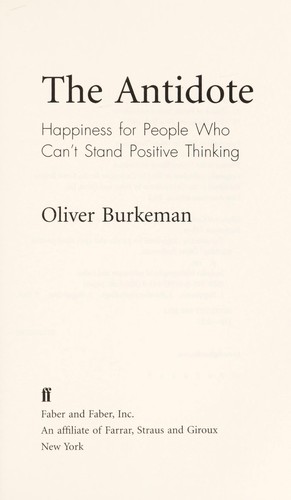 The antidoteOliver Burkeman
 The Lie That Keeps You Feeling Behind Every Single Day Oliver BurkemanThe Daily Stoic