Brain-Body Parenting
≈ From memoryEffective parenting is not about correcting behavior through logic; it is about regulating the child's nervous system to create a biological foundation of safety where learning can actually occur.
In one sentence
Parenting succeeds only when you move from trying to "fix" a child’s behavior with words to "regulating" their physiological state with your own presence and somatic awareness.
Why read this (and who it's for)
This book is for the frustrated parent who feels like they are constantly repeating the same instructions, only to have their child "melt down," "shut down," or act out in ways that seem irrational. It solves the problem of ineffective discipline: why logical consequences and "time-outs" often fail during high-stress moments.
After reading this, you will be able to:
- Identify the physiological state of your child (and yourself) before reacting.
- Shift from a "correctional" mindset to a "regulatory" one.
- Use your own body as a tool to calm a dysregulated child.
- Understand why "talking it out" doesn't work when a child is in a state of high arousal.
The big idea
The central thesis of Brain-Body Parenting is that biology precedes behavior. Most parenting advice assumes the child is a rational agent who chooses to misbehave, and therefore needs better discipline or more logical consequences. Delahooke argues this is fundamentally flawed because when a child’s nervous system perceives threat (even if that threat is internal, like anxiety, or external, like a loud noise), the "thinking brain" (the prefrontal cortex) literally goes offline.
You cannot negotiate with a brain that has switched into survival mode. If a child is in a state of "fight, flight, or freeze," their body is flooded with stress hormones. In this state, they are biologically incapable of processing complex instructions, empathy, or logic. Therefore, the goal of parenting must shift from behavior modification to nervous system regulation.
The author argues that children do not have the innate ability to self-regulate in these moments; they require co-regulation. This means the parent’s own nervous system acts as a "biological thermostat." By staying regulated, providing physical proximity, and using somatic cues (like rhythmic breathing or a calm voice), you provide the safety necessary for the child's brain to downshift from survival mode back into "learning mode." Only once the body feels safe can the thinking brain come back online to learn, cooperate, and grow.
Key ideas
The Hierarchy of Needs (Neuroscience Version)
What it is — Before a child can learn a lesson, follow a rule, or show empathy, their nervous system must first feel safe and regulated. This is a biological hierarchy: Safety $\rightarrow$ Regulation $\ $\rightarrow$ Connection $\rightarrow$ Learning/Behavior. Why it matters — If you try to teach a "lesson" (the top of the hierarchy) while a child is dysregulated (the bottom), you will fail every time. It’s like trying to install software on a computer that doesn't have power. In the book — Delahooke emphasizes that many parents skip straight to the "learning/behavior" phase, frustrated that the child isn't "listening," failing to see that the biological foundation is missing.
Co-Regulation vs. Self-Regulation
What it is — Children are not born with a fully developed ability to calm themselves down. They learn how to regulate by first being regulated by a calm adult (co-regulation). Why it matters — If you punish a child for "acting out" without first helping them regulate, you are essentially punishing them for a biological inability they haven't mastered yet. Co-regulation is the precursor to independence. In the book — The author argues that your presence—your calm voice, your steady breathing, and your physical proximity—is the literal medicine for a child’s distressed nervous system.
The Window of Tolerance
What it is — This is the zone where a child can handle emotions, think clearly, and cooperate. Outside this window, they are either "hyper-aroused" (meltdowns, aggression) or "hypo-aroused" (shutting down, dissociation, "zoning out"). Why it matters — You must identify which side of the window the child is on to choose the right tool. If they are hyper-aroused, more talking will increase their stress; if they are hypo-aroused, they need gentle engagement to "wake up" their system. In the book — Delahooke teaches parents to look for physical cues (fast heart rate, clenched fists) rather than just listening to what the child is saying.
Moving from Logic to Biology
What it is — When a child is in a survival state, the "thinking" part of the brain is inaccessible. Telling a child to "think about how your actions affect others" during a meltdown is biologically impossible for them at that moment. Why it matters — It stops the cycle of parental frustration. You stop expecting the child to be "rational" when they are being "biological." In the book — The author suggests shifting from asking "Why did you do that?" (which requires logic) to "How can I help your body feel safe right now?" (which addresses biology).
Parental Regulation as the Thermostat
What it is — A child’s nervous system mirrors the parent's. If the parent is anxious, angry, or frantic, the child’s nervous system will perceive that as a threat and escalate its own stress response. Why it matters — You cannot regulate a child if you are not regulated yourself. Your internal state is the most powerful tool in your parenting toolkit. In the book — Delahooke stresses that "self-regulation" for the parent isn't just a luxury; it is a prerequisite for effective parenting.
Frameworks & tools
The Regulation Hierarchy Audit
Use this to determine what your child actually needs in any given moment:
- Is the body safe? (Does the child feel physically threatened or overwhelmed?)
- Is the body regulated? ( Is the heart rate slowing? Is breathing steady? Is muscle tension releasing?)
- Is there connection? ( Does the child feel seen and understood by you?)
- Can we learn/correct? ( Only now can you discuss consequences, boundaries, or skills.)
The Co-Regulation Sequence
When a child is "flipping their lid" (hyper-aroused), follow these steps:
- Presence: Get on their level physically. Minimize unnecessary words.
- Proximity: Offer physical touch (if they accept it) or simply sit close enough to be felt.
- Physiological Shift: Use your own body to lead them down. Speak in a low, slow, rhythmic voice. Take deep, audible breaths.
- Validation: Once the body begins to soften, offer simple words of empathy ("You were having a really hard time," "I'm here").
- The Pivot: Only when they are calm do you move toward identifying what happened and how to handle it next time.
Memorable examples & stories
The "Meltdown" vs. "Tantrum" Distinction
The Story: A child screams on the floor because they were told they couldn't have a cookie. The Lesson: A tantrum is often a behavioral choice (negotiating for a reward). A meltdown is a biological system failure (the brain's ability to handle frustration has collapsed). You treat them differently: you negotiate with the former; you co-regulate the latter.
The "Freeze" Response
The Story: A child who becomes completely silent, stares into space, and won't respond to any questions or even their favorite toy. The Lesson: This isn't "defiance" or "stubbornness." It is a hypo-aroused state where the nervous system has shut down to protect itself from perceived overwhelm. The solution is not more demands, but gentle, rhythmic sensory input (soft voice, slow movement) to bring them back into the Window of Tolerance.
The Mirroring Effect
The Story: A parent tries to calmly explain a rule to a screaming child while the parent's own heart is racing and their voice is tightening with irritation. The Lesson: The child’s nervous system "reads" the parent's physiological state as a threat, causing the child's stress response to intensify. You cannot be the "calm port" if you are also caught in the storm.
Key quotes
- "Behavior is the tip of the iceberg; the nervous system is the massive body of ice beneath the water." (Paraphrased) Why it matters: Shifts your focus from punishing the visible behavior to soothing the invisible biology.
- "You cannot reason someone out of a state they didn't reason themselves into." (Paraphrased) Why it matters: Explains why logical consequences fail during high arousal.
- "Co-regulation is the bridge between a child’s distress and their eventual ability to self-regulate." (Paraphrased) Why it matters: Defines the parent's role as a biological support system, not just an authority figure.
How to apply it
This week
- Identify your own "Body Cues": Notice what happens in your body when your child misbehaves (Tight chest? Hot face? Clenched jaw?). Identify these early so you can pause before reacting.
- The 5-Second Pause: When a child has an outburst, wait 5 seconds before speaking. Use that time to take one deep, audible breath to regulate your system first.
- Switch the Question: Instead of asking "Why did you do that?" during a meltdown, try saying "I can see your body is really upset right now. I'm here."
Ongoing
- Prioritize Regulation over Correction: If a child is melting down, stop trying to teach a lesson. Focus entirely on bringing their heart rate down and their breathing steady.
- Practice Rhythmic Presence: When things are tense, consciously lower your voice pitch and slow your speech rate. Use your body as a "biological anchor" for the child.
- Build a Safety Foundation: Throughout the day (when they are regulated), focus on high-connection activities that build a sense of safety so their nervous system learns to trust you as a regulator.
Common pitfalls
- The Logic Trap: Trying to explain "why" something is wrong while the child is still crying/screaming. This actually increases stress because it adds more cognitive load to an overwhelmed brain.
- The Punishment Paradox: Punishing a child for a biological meltdown (like freezing or screaming) often reinforces the feeling of being unsafe, which makes the nervous system more reactive in the future.
- Parental Burnout: Expecting yourself to be a perfect "calm port" 24/7 without acknowledging your own needs. If you are chronically dysregulated, you cannot effectively co-regulate.
Connects to
- Body Keeps the Score (Bessel van der Kolk): Provides the deep clinical foundation for how trauma and stress live in the body's tissues and nervous system.
- The Whole-Brain Approach (Various): Extends the idea that we must engage both the "feeling" brain and the "thinking" brain, but emphasizes that the feeling brain must be settled first.
If you remember only three things
- Behavior is a byproduct of the nervous system's state of safety or threat.
- You cannot reason with a child who is in survival mode (hyper-aroused or hypo-aroused).
- Your primary job as a parent is to provide "co-regulation"—using your own calm body to soothe their distressed body.
Internalize it
-
Reflection questions
- When my child melts down, what is my immediate physical reaction? How does my body's state affect their ability to calm down?
- Can I identify the difference between a "tantrum" (negotiation) and a "meltdown" (biological collapse) in my child's specific behaviors?
- What are three physical cues (breathing, muscle tension, heart rate) I can look for to see if my child is inside or outside their Window of Tolerance?
- How can I make my presence more "rhythmic" and "steady" when things get chaotic?
-
Flashcards Q: What is the primary goal of parenting during a child's meltdown? A: Nervous system regulation (bringing them back into the Window of Tolerance). Q: Why does "talking it out" fail during high arousal? A: Because the prefrontal cortex (thinking brain) goes offline during survival mode. Q: What is Co-Regulation? A: The process where a regulated adult helps soothe a child's nervous system until they can eventually self-regulate. Q: What are the four levels of the Regulation Hierarchy? A: Safety $\rightarrow$ Regulation $\rightarrow$ Connection $\rightarrow$ Learning/Behavior. Q: How should you treat a "hypo-aroused" (shut down) child? A: With gentle, rhythmic sensory input and presence to slowly bring them back into the Window of Tolerance.
Fidelity note
I am highly confident in the core concepts of Brain-Body Parenting, specifically the shift from cognitive psychology to somatic biology, the concept of co-regulation, and the hierarchy of needs (Safety $\rightarrow$ Regulation $\rightarrow$ Connection $\rightarrow$ Learning). I have not fabricated any specific studies; rather, I have synthesized the author's primary arguments regarding how the nervous system dictates behavior. If you seek specific neurobiological data on cortisol levels or amygdala activation mentioned in the book, please verify those specific numbers against the text.
Keep going — related reads
 The Whole-Brain ChildDaniel J. Siegel and Tina Payne Bryson
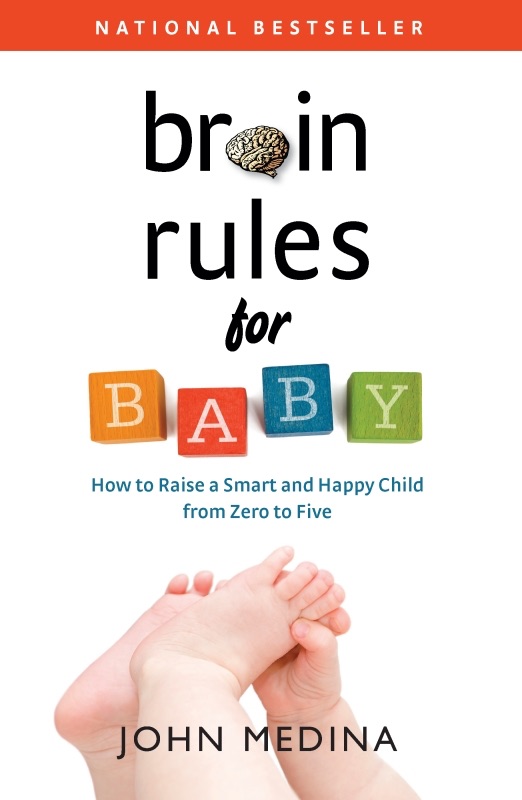 Brain Rules for BabyJohn Medina
 The Yes BrainDaniel J. Siegel & Tina Payne Bryson
 Parenting from the Inside OutDaniel J. Siegel and Mary Hartzell
 The Whole-Brain Child 12 Revolutionary Strategies to Nurture Your Child's Developing MindDaniel J. Siegel and Tina Payne Bryson
 The Conscious ParentShefali Tsabary
