The evolution of God
≈ From memoryHumanity's concept of God is not a discovery of an external reality, but a biological and cultural byproduct of our evolution as social, symbolic-thinking animals.
In one sentence
God is a "cultural technology" developed by the human brain to facilitate social cohesion and group survival, rather than a literal, supernatural entity.
Why read this (and who it's for)
This book solves the "problem of belief" by stripping away the mystery of religion and replacing it with a biological and sociological explanation. It is for the skeptic who wants to understand the mechanics of faith, the seeker who wants to understand why their brain is wired for spirituality, and the historian of ideas who wants to see how human culture shapes our perception of reality. After reading, you will be able to see religious rituals and beliefs as sophisticated social tools for cooperation rather than "truths" about the afterlife.
The big ideas
Wright argues that the human brain is a "meaning-making machine." Because our ancestors survived by forming groups, and because groups require trust, we evolved a cognitive architecture that seeks patterns, agency, and purpose in the world. This "hyperactive agency detection" means we see intentions behind events (e.g., "the wind is blowing" vs. "the wind is angry") because attributing agency makes the world more predictable and manageable.
The "God" of our ancestors was a personification of the environment—a way to make the terrifying, unpredictable forces of nature (storms, predators, droughts) into relatable characters with whom we could negotiate. As we moved from hunter-gatherer bands to large-scale civilizations, these "gods" became the glue that allowed thousands of strangers to cooperate. Religion, therefore, is a sophisticated social technology that scales human cooperation beyond the limits of personal acquaintance.
Key ideas
The Agency Detection Device
- What it is — The human brain is evolutionarily primed to see "agency" (intent) in the world. We are wired to assume that if a bush rustles, it is a predator, not just the wind.
- Why it matters — This explains why we are so prone to seeing "spirits" or "gods" in nature; our brains prioritize survival over accuracy.
- In the book — Wright discusses how this bias leads us to interpret natural phenomena as intentional acts, creating the foundation for all supernatural belief.
Cultural Evolution vs. Biological Evolution
- What it is — While biological evolution happens over generations via genes, cultural evolution happens in a single generation via "memes" or shared ideas.
- Why it matters — Culture can change our behavior and beliefs much faster than our biology can change our bodies, allowing for rapid adaptation to social environments.
- In the book — Wright explains how religious myths act as "memes" that survive because they are useful for group bonding, not because they are true.
The Social Glue of Ritual
- What it is — Rituals are not just about pleasing a deity; they are about synchronizing the emotions and behaviors of a group.
- Why it matters — Ritual creates "collective effervescence," a shared state of mind that makes a large group of people act as a single organism.
- In the book — He explores how repetitive, synchronized actions (like chanting or dancing) solidify group identity and ensure cooperation.
The "God of the Gaps" as a Moving Target
- What it is — As science explains more of the natural world, the "divine" recedes into the remaining unknowns.
- Why it matters — It shows that "God" is often defined by what we don't yet understand, making the concept a placeholder for mystery rather than a fixed entity.
- In the book — Wright notes how religious claims often shift to the "unexplainable" as scientific progress erases old supernatural explanations.
The Moral Architecture of Religion
- What it is — Religion provides a shared moral framework that allows for "pro-social" behavior among strangers.
- Why it matters — Without a shared belief system, large-scale cooperation (like building a city or a trade network) becomes impossible because trust is limited by personal acquaintance.
- In the book — He argues that religion functions as a "moral infrastructure" that allows humans to scale their cooperation to thousands of people.
Frameworks & tools
The Agency Detection Framework
Use this to analyze why you believe what you believe. When you feel a "presence" or see a "sign," break it down:
- Identify the Event: What happened? (e.g., a coincidence).
- Identify the Agency: What "intent" did your brain assign to it? (e.g., "it was a sign").
- Identify the Survival Value: How does believing this makes the world feel safer or more predictable?
The Ritual Synchrony Checklist
Use this to understand how groups build trust and cohesion:
- Shared Focus: Does the group have a common goal or story?
- Synchronized Action: Are people moving, speaking, or breathing in unison?
- Emotional Peak: Is there a moment of intense, shared feeling (the "effervescence")?
- Repetition: Is the act repeated to build "muscle memory" for the social bond?
Memorable examples & stories
The "Angry" Storm
Wright describes how early humans viewed lightning and thunder as the wrath of a deity. By personifying the storm, they turned a terrifying, random physical event into a predictable social interaction (if I offer a sacrifice, the storm will stop). Lesson: Personification is a survival strategy for managing fear.
The Hunter-Gatherer Tribe
The author looks at how small bands of humans relied on "shared myths" to ensure that everyone contributed to the hunt and shared the meat. Lesson: Myths are the "software" that allows the "hardware" of human cooperation to run.
The Evolution of the "Good" Person
He explores how religious morality creates "super-peers"—people who are willing to sacrifice their own interests for the group's survival. Lesson: Religion isn't just about "heaven"; it's about creating a reliable, selfless social environment.
Key quotes
"The human brain is a meaning-making machine... it is designed to find patterns and purpose in a world that is often chaotic and indifferent." (Paraphrased) Why it matters: This explains why we are never truly "objective" observers; we are always interpreting.
"Religion is a cultural technology for social cohesion." (Paraphrased) Why it matters: It shifts the focus from the supernatural to the sociological.
"The gods of our ancestors were the personified forces of nature, designed to make a terrifying world navigable." (Paraphrased) Why it matters: It explains the origin of the "sacred" as a psychological coping mechanism.
How to apply it
This week
- Audit your "Signs": The next time you see a "coincidence" (a license plate, a song on the radio), stop and ask: "What story is my brain trying to tell me here?"
- Observe Ritual: Watch a sports game or a concert. Notice how the crowd moves as one. Identify the "collective effervescence" and how it builds a sense of belonging.
Ongoing
- Practice "Agency Awareness": When you feel a sense of "intuition" or "spirit," acknowledge it as a brilliant evolutionary tool for pattern recognition, not necessarily a literal ghost.
- Analyze Cultural Myths: When you see a news story about a religious conflict, try to see it through Wright’s lens: what "social glue" is being defended? What group identity is at stake?
Common pitfalls
- The "Atheist" Trap: Some readers might think this means religion is "fake" and therefore worthless. Wright argues the opposite: religion is real in its effects. It produces real communities, real art, and real social cohesion.
- The "Evolutionary Determinism" Trap: Do not assume that because a behavior is evolved, it is "wrong" or "inevitable." Evolution provides the tools; humans decide how to use them.
- Over-simplification: Wright is a social scientist, not a theologian. He is explaining the how of belief, not the what of the divine.
Connects to
- "Sapiens" by Yuval Noah Harari: Extends the idea of "imagined realities" as the basis for human civilization.
- "The Selfish Gene" by Richard Dawkins: Provides the biological foundation for how traits (including cultural ones) are passed on.
- "The Varieties of Religious Experience" by William James: Offers a psychological counterpart to Wright's sociological/biological view of religious experience.
If you remember only three things
- God is a cultural technology created by the human brain to facilitate group cooperation.
- Our brains are "hyperactive agency detectors" that see intent where there is often only randomness.
- Religion functions as a "social glue" that allows humans to trust and cooperate with strangers at a massive scale.
Internalize it
-
Reflection questions
- If religion is a tool for social cohesion, what other "imagined" tools do we use today (e.g., corporations, nations, brands)?
- How does my own "agency detection" bias affect my daily decisions?
- How can I use the concept of "ritual" to build better community in my own life?
-
Flashcards Q: What is the primary function of "God" in Wright's theory? A: To act as a cultural technology for social cohesion and group survival. Q: Why is the human brain a "meaning-making machine"? A: Because our ancestors survived by finding patterns and attributing agency to the environment to make it predictable. Q: What is "collective effervescence"? A: The synchronized emotional state of a group created through shared ritual and focus. Q: How does "agency detection" relate to religious belief? A: It is the evolutionary tendency to see intent behind natural events, which provides the foundation for supernatural beliefs. Q: How does cultural evolution differ from biological evolution? A: Cultural evolution happens within a single generation through the transmission of ideas (memes).
Fidelity note
I am highly confident in the core thesis of Wright's work: that religion is a social technology and that the human brain is wired for agency detection. I am certain of the "social glue" and "cultural technology" arguments. However, because Wright's work is dense and covers a wide range of anthropological and psychological theories, specific nuances regarding his interpretation of certain historical religious movements may be simplified in this summary. Readers should verify the specific historical examples (like the transition from hunter-gatherer to agrarian societies) in the text to see the full breadth of his historical analysis.
More from Robert Wright
 #102 — Is Buddhism TrueMaking Sense with Sam Harris
 Building bicycle wheelsRobert Wright
 NonzeroRobert Wright
 The God We Deserve Nonzero's Robert Wright on AI as Humanity's Ultimate TestThe Cognitive Revolution
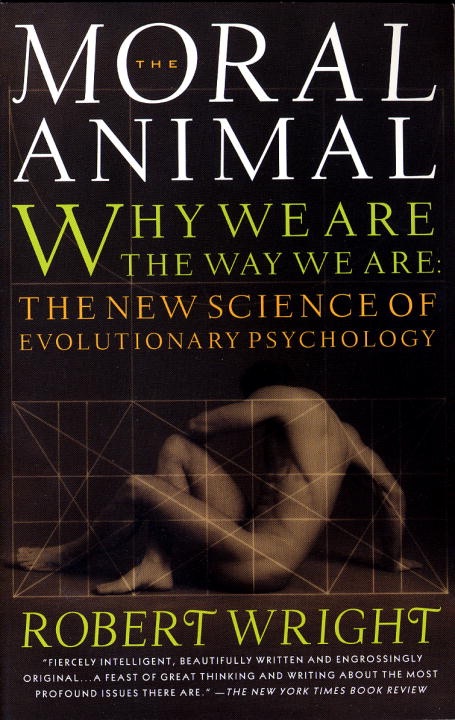 The Moral Animal Why We Are, the Way We AreRobert Wright
 Three scientists and their godsRobert Wright
 Why Buddhism Is TrueRobert Wright