Linchpin
≈ From memoryIn an automated world, the only way to remain indispensable is to become a 'linchpin'—someone who can do things that machines cannot: think, create, and connect.
In one sentence
The modern economy is shifting from a "safe" industrial model to a "dangerous" creative model where the most valuable workers are those who can navigate ambiguity, create new things, and connect disparate ideas.
Why read this (and who it's for)
This book is for anyone who feels like a "cog in a machine"—the person who knows their job is being automated, outsourced, or undervalued. It solves the anxiety of the "replaceable" worker by providing a roadmap for becoming an irreplaceable asset. After reading this, you will stop trying to be a better "worker" (a person who follows instructions) and start becoming a "creator" (a person who solves problems).
The big idea
We are living in a world that is being "optimized" to death. Automation, algorithms, and outsourcing have made the "safe" jobs of the 20th century—the ones that required following a manual and doing the same thing every day—obsolete. If your job can be described in a manual, a machine can eventually do it better, faster, and cheaper.
Godin argues that the only way to survive this shift is to become a Linchpin. A linchpin is a person who is essential to the organization because they can do things that are not easily automated: they can think, they can create, and they can connect. They don't just "do" a job; they own a piece of the outcome. They are the ones who see a problem, find a creative solution, and make it happen without being told exactly how to do it.
The logic is simple: As the world becomes more automated, the premium on human-centric skills (empathy, creativity, intuition, and complex problem-solving) skyrockets. To be a linchpin, you must move from being a "safe" employee to a "dangerous" one—someone who takes risks, creates new things, and finds ways to make the business more profitable or meaningful.
Key ideas
The Death of the "Safe" Job
- What it is — The industrial age rewarded people for being predictable and following instructions. The information age rewards people who can handle ambiguity and create new value.
- Why it matters — If you compete on "following instructions," you are competing against a machine. You will lose. You must compete on "judgment" and "creativity."
- In the book — Godin discusses how many jobs that were considered "stable" 20 years ago (like middle management or certain administrative roles) are being hollowed out by software and outsourcing.
The Linchpin vs. The Cog
- What it is — A "cog" is a part of a machine; a "linchpin" is the piece that holds the machine together. Cogs are replaceable; linchpins are essential.
- Why it matters — Cogs are managed; linchpins are empowered. To be a linchpin, you must stop asking "What should I do?" and start asking "What needs to be done?"
- In the book — He contrasts the worker who waits for a task list with the worker who identifies a gap in the business and fills it without being asked.
The Power of "Dangerous" Work
- What it is — "Safe" work is doing what you're told. "Dangerous" work is taking a risk, trying something new, and potentially failing.
- Why it matters — Innovation only happens in the "dangerous" zone. If you only do what is expected, you will never be indispensable.
- In the book — Godin argues that the most successful people are those who are willing to be "wrong" in the pursuit of something better.
The Importance of Connection
- What it is — Value is often found in the space between things. Connecting two unrelated ideas or people to create a new outcome is a uniquely human skill.
- Why it matters — Machines are great at processing data; humans are great at synthesizing meaning. Connection is the ultimate "un-automatable" skill.
- In the book — He highlights how the most valuable people in a company are often those who can bridge the gap between the engineering team and the marketing team, or the product and the customer.
The "Work" of Thinking
- What it is — Thinking is not a byproduct of doing; it is a skill that must be practiced.
- Why it matters — Most people stop thinking the moment they get a job. They let their employers think for them. To be a linchpin, you must reclaim your ability to think critically and creatively.
- In the book — Godin encourages readers to spend time in "deep work"—thinking about the "why" and "how" of their industry, not just the "what."
Frameworks & tools
The Linchpin Mindset Shift
To move from Cog to Linchpin, you must audit your daily actions against these three dimensions:
- Ownership of Outcome: Stop asking "What is my task?" Start asking "What is the goal, and how can I help achieve it?"
- The "Un-automatable" Audit: Look at your daily to-do list. Which items could a robot or a script do? (Do those as fast as possible). Which items require empathy, judgment, or creative synthesis? (Spend your time here).
- The "Dangerous" Initiative: Once a week, do one thing that is not in your job description but would benefit the company. This could be a new idea, a new connection, or a new process.
The Creative Connection Framework
When trying to innovate, use this three-step process to find "Linchpin" opportunities:
- Identify the Friction: Where is the business currently "grinding" or losing money?
- Cross-Pollinate: Look at a completely different industry or hobby. How would they solve this?
- Synthesize: Create a solution that combines the two. (e.g., "How would a chef organize our warehouse inventory?")
Memorable examples & stories
The Automated Warehouse
Godin describes how warehouses are becoming fully automated. The lesson is that if your job is to move a box from point A to point B, you are in the "danger zone." You must move toward the roles that design the warehouse flow or manage the human relationships within it.
The "Safe" Manager
He tells the story of managers who were promoted because they were good at following the rules of the previous level. These people often fail because they don't know how to create—they only know how to administer. The lesson: Administration is a dying skill; creation is the future.
The Artist vs. The Employee
Godin uses the metaphor of an artist. An artist doesn't wait for a "brief" to be perfect; they observe the world and create. A linchpin treats their career like an art form—a series of creative choices made to solve human problems.
Key quotes
"The safest way to be replaced is to do exactly what you're told." Why it matters: Compliance is the fastest route to obsolescence.
"A linchpin is someone who can do things that are not easily automated." Why it matters: It defines the "moat" you must build around your career.
"The world is becoming a place where the 'how' is being automated, and the 'why' and 'what' are becoming the only things that matter." (Paraphrased) Why it matters: It shifts the value proposition from execution to strategy and intent.
How to apply it
This week
- The "Why" Audit: Pick one task you do every day. Write down why you do it and what the ultimate goal is. If you can't find a "why" beyond "because I was told to," you've found a cog-task.
- The Connection Reach-out: Identify one person in a different department or industry. Ask them about their biggest challenge. Don't try to sell anything; just listen for a "connection" opportunity.
- The "Dangerous" Idea: Write down three things you would change about your current company or project if you were the owner. Don't tell anyone yet—just get the ideas out of your head.
Ongoing
- The 80/20 Rule of Automation: Aim to automate or delegate 80% of your "safe" tasks (data entry, scheduling, basic reporting) so you can spend 80% of your energy on "dangerous" tasks (strategy, creative problem solving, relationship building).
- Active Thinking: Schedule 30 minutes of "thinking time" on your calendar every day. No emails, no Slack, no "doing." Just thinking about problems and solutions.
- Be the Connector: Make it your mission to be the person who knows who to call for any given problem. Become the human hub of your organization.
Common pitfalls
- The "Busy" Trap: Many people mistake "being busy" for "being a linchpin." Doing a lot of tasks quickly is just being a high-speed cog. A linchpin is measured by the impact of their unique contributions, not the volume of their to-do list.
- Over-estimating "Creativity": People think being a linchpin means being a painter or a poet. It doesn't. It means being useful in a way that requires human judgment. You can be a linchpin in accounting, logistics, or HR.
- The Fear of "Dangerous" Work: The hardest part of this book is the psychological shift. It is terrifying to stop asking for permission and start taking ownership. Many readers will read this, agree with it, and then immediately go back to their "safe" (but precarious) routine because it feels easier in the short term.
Connects to
- "Deep Work" by Cal Newport: Extends the idea of "thinking" as a skill. While Godin focuses on the why of thinking, Newport provides the how of focusing on that thinking.
- "The Innovator's Dilemma" by Clayton Christensen: Provides the structural context for why the "safe" industrial model is being disrupted by the "dangerous" creative model.
- "Atomic Habits" by James Clear: Provides the framework for actually implementing the "Ongoing" habits required to become a linchpin.
If you remember only three things
- Automation is the enemy of the "Safe" worker: If your job is a set of instructions, you are replaceable.
- Linchpins are defined by "Un-automatable" skills: These are thinking, creating, and connecting.
- Ownership is the only path to security: You must stop asking for permission and start identifying the problems that need solving.
Internalize it
-
Reflection questions
- If my current job description disappeared tomorrow, what specific problems would I still be able to solve for my company?
- Which parts of my day are "safe" (easily automated) and which are "dangerous" (require my unique judgment)?
- When was the last time I took a "dangerous" risk at work? What was the result?
- Who is the "linchpin" in my current organization, and what specific skills do they possess that I can emulate?
-
Flashcards Q: What is the difference between a "cog" and a "linchpin"? A: A cog follows instructions and is part of a machine; a linchpin is essential because they can do things that are not easily automated (thinking, creating, connecting).
Q: What are the three "un-automatable" skills? A: Thinking, creating, and connecting.
Q: Why is "safe" work a liability in the modern economy? A: Because "safe" work is predictable, and predictable work is exactly what machines and algorithms are designed to do.
Q: What does Godin mean by "Dangerous" work? A: Work that involves taking risks, trying new things, and potentially failing in pursuit of a better outcome.
Q: How can you practice "thinking" as a skill? A: By scheduling dedicated time to think about the "why" and "how" of your work, free from the distractions of "doing" tasks.
Fidelity note
I have a high level of confidence in the core themes of Linchpin. The distinction between "safe" and "dangerous" work, the definition of a linchpin as a connector/creator, and the critique of the industrial-era "cog" mentality are the pillars of Godin's argument. I am confident in the "un-automatable" skills (thinking, creating, connecting) as the primary framework. However, because I am summarizing from memory, specific anecdotes (the exact names of companies or specific individuals) should be verified against the text to ensure 100% accuracy. The "Dangerous" vs. "Safe" terminology is a hallmark of Godin's specific vocabulary in this book.
More from Seth Godin
 #105 Seth Godin Failing On Our Way To MasteryThe Knowledge Project
 All marketers are liarsSeth Godin
 Carbon AlmanacSeth Godin
 Free Prize InsideSeth Godin
 Permission MarketingSeth Godin
 Poke the boxSeth Godin
 Purple CowSeth Godin
 Small Is the New BigSeth Godin
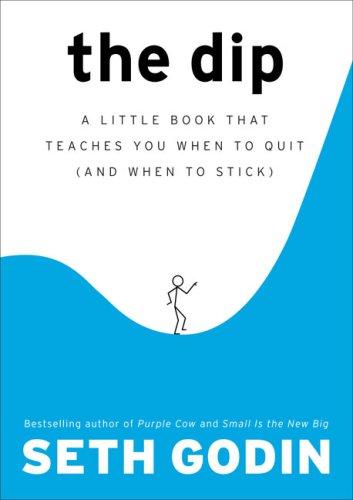 The DipSeth Godin
 The PracticeSeth Godin
 The Quitting Expert Quit NOW Before AI Makes The Choice For You, This Is a Superpower! Seth GodinThe Diary of a CEO
 This Is MarketingSeth Godin