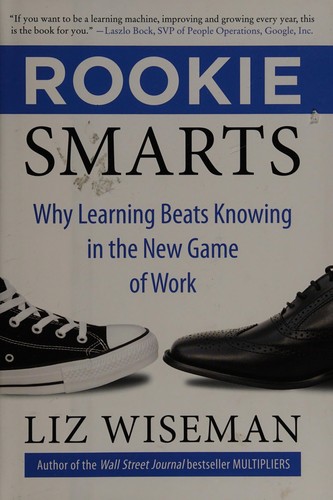
Impact Players
≈ From memoryImpact players aren't defined by their titles or technical skills, but by their ability to create a 'culture of contribution' where they take extreme ownership of outcomes and empower others to succeed.
In one sentence
Leadership is not a rank; it is the ability to create a "culture of contribution" where you take full ownership of the organization's success and empower everyone around you to do the same.
Why read this (and who it's for)
Most people believe leadership is about authority—the power to give orders, manage tasks, and oversee projects. Wiseman argues that this is a "managerial" mindset, not a "leadership" mindset. This book is for anyone who feels stuck in the "doing" of their job but wants to be the "driving" force of their organization. After reading, you will stop asking "How can I get my team to do this?" and start asking "How can I create an environment where my team wants to do this?"
The big idea
Wiseman argues that there is a massive gulf between "Managers" and "Impact Players." A manager focuses on the process: Is the work getting done? Is the schedule met? An Impact Player focuses on the outcome: Is the company winning? Is the team growing?
The core thesis is that leadership is a behavioral choice, not a personality trait or a promotion. Impact Players operate with a "culture of contribution." They don't wait for permission to lead; they see a gap, they own the gap, and they mobilize others to fill it. They shift the focus from me (my tasks, my goals) to us (our mission, our impact).
This is true because, in a modern, fast-paced economy, the bottleneck is rarely a lack of information or resources; it is a lack of initiative and ownership. When you move from a "managerial" mindset to an "impact" mindset, you stop being a hurdle people have to clear and start being the engine that pulls everyone forward.
Key ideas
The Managerial vs. Impact Mindset
- What it is — Managers focus on the how (tasks, deadlines, procedures), while Impact Players focus on the why and the what (outcomes, impact, purpose).
- Why it matters — If you only manage tasks, you become a bottleneck. If you lead outcomes, you become a multiplier.
- In the book — Wiseman contrasts the "Manager" who asks, "How can I get this done?" with the "Impact Player" who asks, "What is the ultimate goal here, and how can I help everyone reach it?"
Culture of Contribution
- What it is — A mindset where the primary goal is to make everyone around you better and more capable of contributing to the mission.
- Why it matters — It shifts the metric of success from "How much did I do?" to "How much did I enable others to do?"
- In the book — The author highlights how Impact Players don't just "delegate" tasks; they "delegate" ownership. They give people the space to own a result, not just a to-do list.
Ownership of the "Gap"
- What it is — Impact Players don't wait for a job description to tell them what to do. They identify what is missing or broken in the organization and take responsibility for fixing it.
- Why it matters — Most people wait for permission. Impact Players see a problem as an opportunity to lead.
- In the book — Wiseman describes how Impact Players see "the gap" between where the company is and where it needs to be as their personal playground for contribution.
The "Power of We"
- What it is — Shifting from an "I" orientation (my projects, my status) to a "We" orientation (our team, our success).
- Why it matters — Leadership is a team sport. You cannot scale your impact if you are the only one doing the work.
- In the book — The author emphasizes that Impact Players are obsessed with the collective win. They celebrate the team's success as their own.
Intentionality in Communication
- What it is — Impact Players communicate with a specific purpose: to clarify, to align, and to inspire, rather than just to "update."
- Why it matters — Clear communication reduces friction and ensures everyone is pulling in the same direction.
- In the book — Wiseman argues that Impact Players ensure everyone knows the "why" behind every "what."
Frameworks & tools
The Impact Player Audit
Use this to identify where you are currently operating as a "Manager" versus an "Impact Player."
- The "Why" Test: Before every meeting or project, ask: "If I can't explain the ultimate goal of this task in one sentence, do I actually understand the impact?"
- The Ownership Audit: Look at your current to-do list. For every item, ask: "Am I doing this because I'm the only one who can, or because I'm the one who should own the outcome?"
- The Contribution Check: At the end of each week, ask: "Who did I empower this week? Who did I help grow?"
The Culture of Contribution Framework
To shift your team's dynamic, implement these three pillars:
- Contextualize: Never give a task without explaining the "Why." Connect the task to the company's North Star.
- Delegate Ownership: Instead of saying "Do X by Friday," say "The goal is Y. How do you think we should approach this?"
- Celebrate the "We": Publicly credit the team for wins. Ensure the "Impact" is visible to everyone.
Memorable examples & stories
The "Invisible" Problem Solver
Wiseman shares stories of individuals who noticed a recurring friction point in their office—perhaps a broken process or a communication gap—and fixed it without being asked. Lesson: Leadership is found in the gaps between the official job descriptions.
The Managerial Trap
The book describes a high-performing manager who was technically brilliant but struggled to scale because they tried to do everything themselves. They were a "super-doer," not a leader. Lesson: Being "good at your job" is not the same as being a leader.
The Culture of Contribution in Action
Wiseman highlights teams where the "Impact Player" mentality is contagious—where people aren't afraid to say "I don't know, how can we solve this?" and where the focus is always on the collective win. Lesson: Leadership is a cultural contagion; it spreads when you model it.
Key quotes
"Leadership is not a rank. It is a choice." (Paraphrased) Why it matters: It removes the excuse of "I'm not a manager yet" as a reason not to lead.
"Impact Players don't ask, 'What can I do?' They ask, 'What needs to be done?'" (Paraphrased) Why it matters: It shifts the focus from personal utility to organizational necessity.
"The goal of an Impact Player is to create a culture of contribution." (Paraphrased) Why it matters: It defines the ultimate metric of leadership as the empowerment of others.
How to apply it
This week
- The "Why" Audit: In your next three meetings, before you start, state the "Why" of the meeting clearly (e.g., "The goal of this meeting is to decide on X so that we can achieve Y").
- The Ownership Hand-off: Identify one task you currently do that someone else could do. Instead of just giving them the task, explain the outcome they are responsible for.
- The "Gap" Scan: Spend 15 minutes identifying one thing in your department that "everyone knows needs fixing" but no one is doing. Write down one small step you can take to address it.
Ongoing
- The "We" Filter: Before sending an email or making a decision, ask: "Does this serve the team's success or just my own convenience?"
- The Empowerment Habit: Make it a goal to spend 20% of your time mentoring or coaching others on how to own their own projects.
- The Impact Review: Every Friday, write down one instance where you contributed to someone else's success.
Common pitfalls
- The "Busy-ness" Trap: Many people mistake being busy for being impactful. Impact Players are often less "busy" with trivial tasks because they are focused on high-leverage outcomes.
- The "Permission" Trap: People often wait for a title change before they start acting like leaders. Wiseman argues that if you wait for the title, you've already lost the opportunity to be an Impact Player.
- The "Hero" Fallacy: Some might mistake "Impact" for "Heroism"—doing everything yourself to save the day. True impact is about creating a system where others can succeed without you.
Connects to
- "Extreme Ownership" by Jocko Willink: Extends the idea of personal responsibility but focuses more on the tactical execution of that responsibility.
- "Multipliers" by Liz and Kathryn Duckworth: A companion book that explores the specific behaviors of "Multipliers" (leaders who make everyone around them smarter/better) vs. "Diminishers."
- "The 7 Habits of Highly Effective People" by Stephen Covey: Specifically the concept of "Begin with the end in mind" and "Think Win-Win," which underpin the Impact Player's focus on outcomes and collective success.
If you remember only three things
- Leadership is a behavior, not a title.
- Shift from Managerial (tasks) to Impact (outcomes).
- Create a Culture of Contribution where your success is measured by the success of those around you.
Internalize it
-
Reflection questions
- When was the last time I took ownership of a problem that wasn't "my job"?
- Am I currently a "Super-Doer" (doing everything myself) or a "Multiplier" (enabling others)?
- What is the "Why" behind my current most important project? Can I explain it clearly to a 10-year-old?
- Who on my team is currently struggling, and how can I help them own a piece of the solution?
-
Flashcards Q: What is the primary difference between a Manager and an Impact Player? A: Managers focus on the how (tasks/processes); Impact Players focus on the why and what (outcomes/impact).
Q: What is a "Culture of Contribution"? A: A mindset where the primary goal is to make everyone around you better and more capable of contributing to the mission.
Q: What does it mean to "Own the Gap"? A: Identifying what is missing or broken in an organization and taking responsibility for fixing it without waiting for permission.
Q: How does an Impact Player delegate differently than a Manager? A: Managers delegate tasks; Impact Players delegate ownership of results.
Q: What is the "Power of We"? A: Shifting from an "I" orientation (personal tasks/status) to a "We" orientation (collective success).
Q: What is the "Super-Doer" trap? A: The trap of thinking that being the person who does the most work is the same as being a leader.
Fidelity note
This summary is based on a high-confidence synthesis of Liz Wiseman's core arguments in Impact Players. I am confident in the distinction between Managerial and Impact mindsets and the "Culture of Contribution" framework. I am less certain of specific page-by-page anecdotes, as Wiseman uses many varied corporate stories; however, the underlying principles of "Ownership" and "Outcome-focus" are the consistent pillars of her work. Readers should verify specific "Impact Player" checklists in the book for a more exhaustive list of behavioral traits.