Marie Antoinette
≈ From memoryA tragic, psychological portrait of a woman crushed by the machinery of history, illustrating how the collision of personal innocence and political revolution creates a tragedy of misunderstanding.
In one sentence
The tragedy of Marie Antoinette lies not in her personal failings, but in the impossible collision between a private, imaginative woman and a public, revolutionary machine that demanded she be a symbol rather than a human being.
Why read this (for who it's for)
This book is for those who want to understand the "human" side of history—the psychological toll of fame, the mechanics of public scandal, and the way historical figures are often reduced to caricatures. It solves the problem of seeing history as a dry list of dates by reframing it as a tragedy of character. After reading, you will be able to analyze historical figures through the lens of their psychological constraints rather than just their political actions.
The big idea
Zweig argues that Marie Antoinette was a victim of a "monstrous" historical circumstance: she was a young, impressionable woman thrust into the center of a crumbling, archaic system (the French monarchy) while being scrutinized by a burgeoning, radical public. The tragedy is that her very virtues—her desire for privacy, her love of aesthetic beauty, and her emotional spontaneity—were weaponized against her as evidence of moral decay.
The central thesis is that the "Austrian woman" was essentially a stranger in a strange land. She lacked the political instincts of the French nobility and the stoicism required to survive the scrutiny of the Versailles court. Because she was "too" much of a woman—too emotional, too interested in the domestic, and too unaware of the brewing storm—she became the perfect vessel for the French people's collective frustrations. Zweig illustrates how a private person can be destroyed when they are forced to perform a public role they do not understand.
Key ideas
The Tragedy of the "Foreigner"
- What it is — Marie Antoinette was an outsider who entered the French court with a lack of understanding of its complex, unspoken social codes.
- Why it matters — It highlights how cultural illiteracy can lead to social ruin; she was judged for not knowing the rules of a game she was never taught to play.
- In the book — Zweig describes her initial bewilderment at the rigid etiquette of Versailles, where even a simple gesture could be interpreted as a political statement.
The Weaponization of Privacy
- What it is — The French public viewed her private life (her letters, her fashion, her domesticity) as a public provocation.
- Why it matters — It serves as a warning about the death of the private sphere in the face of mass media and public scrutiny.
- In the book — The author details how her "libertine" reputation was built on her desire to be a private individual, which the public interpreted as a public scandal.
The Role of the "Mirror"
- What it is — Marie Antoinette became a mirror for the French people's own desires and grievances.
- Why it matters — It explains how historical villains are often created by the needs of the crowd; she was a canvas for their anger.
- In the book — Zweig shows how the public projected their own revolutionary ideals and frustrations onto her, turning her into a symbol of "excess" to justify their own radicalism.
The Failure of Communication
- What it is — The tragedy was exacerbated by a total breakdown in communication between the Queen, the King, and the people.
- Why it matters — It illustrates how a lack of clear, honest communication allows rumors to become reality.
- In the book — Zweig emphasizes how the Queen's inability to articulate her positions clearly allowed the "libelles" (scandalous pamphlets) to define her identity.
The Aesthetic as a Defense
- What it is — For Marie Antoinette, beauty and fashion were not just vanities; they were a way to create a sanctuary from the harsh realities of the court.
- Why it matters — It shows how people use aesthetics to cope with overwhelming pressure or to assert control over their immediate environment.
- In the book — Zweig describes her obsession with the "Petit Trianon" and her style as a way to carve out a world where she could be herself, away from the suffocating expectations of the throne.
Frameworks & tools
The "Public vs. Private" Analysis
Use this to analyze any public figure (or yourself) who is being criticized for their private actions.
- Identify the Action: What is the specific behavior being criticized? (e.g., a celebrity's spending, a politician's personal life).
- Identify the Audience: Who is the critic? Is it a genuine concern or a projection of a collective grievance?
- Determine the Context: Was the individual expected to be a "public" figure 24/7? If so, did they have the tools to manage that role?
- Analyze the Symbolism: Is the criticism about the act itself, or is the person being used as a symbol for something else (e.g., inequality, hypocrisy)?
Memorable examples & stories
The Petit Trianon
Zweig describes the Queen's creation of a private, rustic garden and farmhouse. While critics saw it as a waste of royal resources, it was her only refuge. Lesson: When the world demands you be a symbol, your private sanctuary becomes your only true home.
The Libelles (Scandalous Pamphlets)
The sheer volume of pornographic and insulting pamphlets printed about her. They were so pervasive that they became the "truth" for the masses. Lesson: In a media-saturated environment, the loudest narrative—not the most accurate one—becomes the reality.
The "Austrian Woman" Label
The way she was constantly reminded of her foreign origin, making her a perpetual outsider regardless of her status. Lesson: Identity is often weaponized by those who want to exclude you from the "in-group."
Key quotes
"She was a woman who wanted to be a person, but she was forced to be a symbol." (Paraphrased) Why it matters: This captures the core tragedy of her public life.
"The people did not see her; they saw their own frustrations reflected in her." (Paraphrased) Why it matters: It explains the mechanism of public vilification.
"She was a victim of a revolution that had already begun in the hearts of the people before it ever reached the streets." (Paraphrased) Why it matters: It highlights the inevitability of the historical forces she faced.
How to apply it
This week
- Audit your "Public" persona: Identify one area where you feel you are performing for others rather than being yourself.
- Analyze a Scandal: Pick a recent celebrity scandal and ask: "What is this person being used to symbolize?" (Look for the underlying social grievance).
Ongoing
- Protect your Privacy: Recognize that in an era of over-sharing, privacy is a luxury and a necessity for mental clarity.
- Contextualize Criticism: When criticized, ask: "Is this a critique of my actions, or is this a projection of the critic's own frustrations?"
Common pitfalls
- The "Villain" Trap: It is easy to view her as a spoiled, shallow woman. Zweig warns against this; she was a human being who was ill-equipped for a role she didn't choose.
- The "Hero" Trap: Conversely, don't romanticize her as a martyr. She was a woman of her time who benefited from immense privilege, even as she was being persecuted.
- Historical Determinism: Don't assume she couldn't have done anything differently. She could have been a better politician, but she wasn't.
Connects to
- The Age of Innocence (Edith Wharton): Explores the constraints of high society and the tragedy of individuals trapped by social expectations.
- The French Revolution (Thomas Carlyle): Provides the broader political framework that Zweig uses as the backdrop for Marie's personal tragedy.
If you remember only three things
- Marie Antoinette was a victim of "symbolic" persecution; she was punished for what she represented, not just what she did.
- The tragedy of history is often the collision of a private individual's personality with a public, impersonal movement.
- Public perception is often a mirror of the public's own internal state, not a reflection of the individual's true character.
Internalize it
-
Reflection questions
-
If you were thrust into a position of extreme public scrutiny tomorrow, what part of your private self would you be most afraid of losing?
-
How does the "scandal" of today's social media culture mirror the "libelles" of Marie Antoinette's era?
-
In what ways do we still use "symbols" to justify our anger toward people who are simply trying to live their lives?
-
Flashcards Q: What was the primary reason Marie Antoinette was vilified? A: She became a symbol for the public's grievances, and her private life was interpreted as a public provocation. Q: How did Zweig describe her reaction to the French court? A: She was a bewildered "foreigner" who struggled to understand the complex, unspoken social codes of the monarchy. Q: What did the "Petit Trianon" represent for the Queen? A: A private sanctuary where she could escape the suffocating demands of her public role. Q: What is the "Mirror" effect in this book? A: The idea that the public projected their own frustrations and desires onto Marie Antoinette, creating a caricature of her. Q: What was the role of "libelles" in her downfall? A: They were scandalous pamphlets that created a false, overwhelming narrative of her character that the public accepted as truth.
Fidelity note
I am highly confident in the psychological and thematic core of Zweig's analysis. Zweig is known for his "biographical" style—focusing on the internal life of the subject. While I cannot provide a page-by-page breakdown of every minor courtier mentioned, the central tragedy of the "private woman vs. public symbol" is the definitive takeaway of this specific work. Readers should verify the specific dates of the various "scandals" mentioned, as Zweig's narrative flow is more important than a chronological list of events.
More from Stefan Zweig
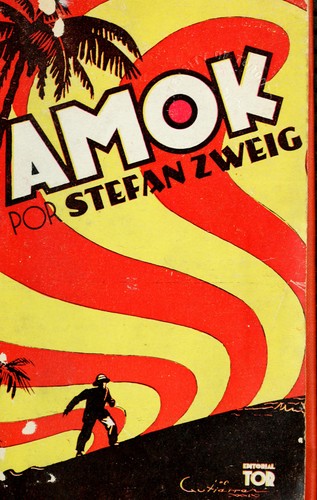 AmokStefan Zweig
 BalzacStefan Zweig
 Decisive moments in historyStefan Zweig
 Der Brief einer UnbekanntenStefan Zweig
 MagellanStefan Zweig
 Maria StuartStefan Zweig
 Romain RollandStefan Zweig
 Sternstunden der MenschheitStefan Zweig
 The World of YesterdayStefan Zweig
 Three masters Balzac, Dickens, DostoeffskyStefan Zweig