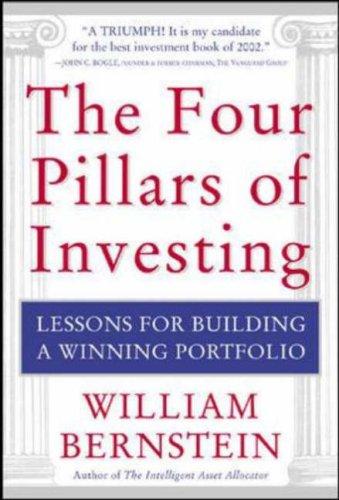
A splendid exchange
≈ From memoryThe history of money is the history of human trust, evolving from physical commodities to abstract symbols of value driven by technological innovation and social cooperation.
In one sentence
Money is not a "thing" but a social technology—a system of shared belief and trust that allows humans to coordinate complex actions across time and space.
Why read this (and who it's for)
Most people view money as a boring utility or a mathematical certainty. Bernstein argues that money is actually a profound sociological and psychological phenomenon. This book is for anyone who wants to understand the why behind our economic systems, from the evolution of credit to the birth of the stock market. After reading, you will be able to see the "invisible" social contracts that underpin every transaction, from a cup of coffee to a global sovereign bond.
The big ideas
Bernstein argues that money is a "splendid exchange" because it allows for the decoupling of value from presence. In a primitive economy, if I want your grain, I must give you a cow right now. In a monetary economy, I give you a piece of paper (or a digital entry) that represents a claim on a future cow. This allows for the specialization of labor and the expansion of trade beyond the limits of physical proximity.
The central thesis is that money functions only because of mutual trust. If you don't believe the other person will honor the trade, the system collapses. Therefore, the history of money is the history of humanity's ability to create and maintain trust. Whether it is gold, paper, or bits of data, the "value" of money is a collective hallucination that becomes a reality because it is useful for organizing human cooperation.
Key ideas
The Evolution of Trust
- What it is: Money is a social technology designed to solve the "coordination problem." It allows strangers to cooperate by providing a common medium of exchange that everyone agrees has value.
- Why it matters: If you view money as a commodity (like gold), you miss the point that its power lies in its sociality. It works because we all agree to act as if it works.
- In the book: Bernstein traces how early societies moved from barter (which is actually quite rare and difficult) to commodity money (shells, salt, cattle) to facilitate trade with people they didn't know.
The Role of Credit
- What it is: Credit is the "time travel" of money. It allows a person to spend today the value they will produce tomorrow.
- Why it matters: Without credit, there is no investment. Without investment, there is no industrial revolution. Credit is the engine of growth because it allows for the expansion of human potential beyond current resources.
- In the book: He explores how the development of sophisticated accounting and lending systems allowed for the creation of large-scale infrastructure and exploration.
Commodity Money vs. Fiat Money
- What it is: Commodity money has intrinsic value (gold, silver, grain). Fiat money is backed only by the "full faith and credit" of a government.
- Why it matters: The transition to fiat money represents the ultimate triumph of human trust over physical reality. It means the entire economy is built on the integrity of the state's promises.
- In the book: Bernstein explains how the gold standard provided a "physical" anchor for trust, but how the modern world relies on the institutional stability of central banks.
The Stock Market as a Time Machine
- What it is: The stock market is a mechanism for pricing the future. It allows investors to buy a "slice" of a company's future potential.
- Why it matters: It democratizes ownership and allows for the massive aggregation of capital required to build corporations. It turns "potential" into "liquid" assets.
- In the book: He describes the evolution of the stock market from a private club for wealthy merchants to a public engine of capitalism.
The Velocity of Money
- What it is: The importance of money is not just its quantity, but how fast it changes hands.
- Why it matters: A stagnant currency is a dead economy. Money must circulate to facilitate the continuous cycle of production, consumption, and reinvestment.
- In the book: Bernstein highlights how the ease of transaction (liquidity) is what allows a complex, globalized economy to function without seizing up.
Frameworks & tools
The Trust-Value Framework
To understand any currency or financial instrument, evaluate it through these three layers:
- The Physical Layer: What is it made of? (Gold, paper, digital code).
- The Institutional Layer: Who guarantees its value? (The State, a Central Bank, a Corporation).
- The Social Layer: Do people actually believe in it? (The "Full Faith and Fortune" test).
The Credit Expansion Model
To understand how wealth is created in a modern economy, follow this cycle:
- Idea/Innovation: A person identifies a way to create value (e.g., a new factory).
- Credit Extension: A lender provides capital based on the future expected profit.
- Capital Investment: The borrower uses the money to build the infrastructure.
- Value Creation: The infrastructure produces goods/services.
- Repayment/Growth: The profit is returned to the lender, and the cycle repeats at a larger scale.
Memorable examples & stories
The Shell Money of the Pacific
Bernstein discusses how certain cultures used shells as a medium of exchange. These shells had no "utility" in the sense of being eaten or worn, but they were perfect for money because they were rare, durable, and universally recognized. Lesson: Money doesn't need to be useful; it only needs to be scarce and socially accepted.
The Rise of the Joint-Stock Company
The story of how the Dutch East India Company (and others) revolutionized the way humans pooled resources. By selling "shares," they could fund voyages that were too risky for any single individual. Lesson: Money is the "glue" that allows for collective action on a massive scale.
The Gold Standard
The era where gold was the ultimate arbiter of value. It provided a "hard" limit on how much money could be printed, creating a stable (if sometimes rigid) environment for trade. Lesson: Stability in money often comes from a physical constraint, whereas growth often comes from a social expansion.
Key quotes
"Money is a social technology, a way of organizing human cooperation." (Paraphrased) Why it matters: It shifts the focus from math to sociology.
"Credit is the ability to borrow from the future." (Paraphrased) Why it matters: It explains why debt is the fundamental driver of modern civilization.
"The value of money is not in the thing itself, but in the trust of the people who use it." (Paraphrased) Why it matters: It highlights the fragility and power of social consensus.
How to apply it
This week
- Audit your "Trust": Look at your bank account or investment portfolio. Ask yourself: "If the institution behind this disappeared tomorrow, what would be left?" This helps you understand the difference between intrinsic and extrinsic value.
- Trace a Transaction: Pick a common item you bought today (like a sandwich). Trace the "chain of trust" required to make that purchase possible (the currency, the credit card, the store's inventory, the supplier's contract).
Ongoing
- Think in "Time-Travel": When considering debt or investment, stop thinking of it as "borrowing." Start thinking of it as "leveraging the future." Ask: "What future value am I claiming today?"
- Observe the Social Contract: When news breaks about inflation or currency devaluation, don't just look at the numbers. Ask: "What has changed in the level of trust between the people and the institution?"
Common pitfalls
- The "Intrinsic Value" Trap: Many people believe money is only "real" if it's backed by gold or physical goods. Bernstein argues that this ignores the most important part of money: the social agreement. If everyone stops believing in the dollar, it becomes worthless instantly, regardless of how much gold is in a vault.
- Overestimating Barter: People often think we traded grain for shoes before money existed. Bernstein clarifies that while barter happened, it was incredibly inefficient for large-scale trade. Money was the solution to the limitations of barter.
- Ignoring the Role of Institutions: It is easy to think of money as a "natural" evolution. It is not. It is a highly engineered social system maintained by laws, enforcement, and cultural norms.
Connects to
- "The Age of Finance" by Nicolas and François Bourquin: Extends the history of financial instruments into the modern era of high-frequency trading.
- "The Alchemy of Finance" by George Clayson: Challenges the "trust" narrative by focusing on the psychological biases and mathematical models of the markets.
- "The Sovereign" by various authors: Explores the role of the State as the ultimate guarantor of the "Full Faith and Credit" that allows fiat money to function.
If you remember only three things
- Money is a social technology built on trust, not a physical commodity.
- Credit is the mechanism that allows humans to "borrow" from the future to build the present.
- The power of money lies in its liquidity—the ability to move value across time and space to coordinate human effort.
Internalize it
-
Reflection questions
- If you were to start a new society on a deserted island, what would be the first "rule" you'd establish to ensure people could trade fairly?
- How does the concept of "borrowing from the future" change the way you view your own personal debt (student loans, mortgages)?
- In what ways does your current job rely on "trust" rather than just "transaction"?
-
Flashcards Q: What is the primary "problem" that money was invented to solve? A: The coordination problem—how to get strangers to cooperate and trade efficiently.
Q: Why is credit considered "time travel" in Bernstein's view? A: Because it allows individuals to spend value today that they haven't produced yet, leveraging future potential.
Q: What is the difference between commodity money and fiat money? A: Commodity money has intrinsic value (like gold); fiat money is backed by the social trust and legal authority of a government.
Q: What is the "Full Faith and Credit" of a currency? A: The collective belief of the public that a government will honor its obligations, which is the sole source of value for fiat money.
Q: Why was barter considered an inefficient precursor to money? A: Because it requires a "double coincidence of wants" (you must have exactly what I want, and I must want exactly what you have), which limits the scale of trade.
Fidelity note
I am highly confident in the core themes of this summary, specifically the distinction between money as a social technology and a physical commodity, and the role of credit as a temporal tool. Bernstein’s focus on the "social" aspect of finance is a hallmark of his work. However, because this is a summary of a historical/theoretical work, specific dates of minor historical figures or specific minor shell-money types may vary slightly in the original text. Readers should verify specific historical dates for the evolution of the stock market and the Gold Standard.