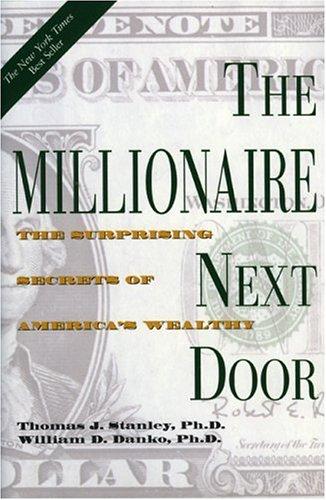
The Millionaire Next Door
≈ From memoryTrue wealth is not a byproduct of high income or ostentatious display; it is the result of consistent, disciplined saving and investing by ordinary people who live modestly.
In one sentence
The difference between being "rich" (having a high income and spending it) and being "wealthy" (accumulating assets through disciplined saving) is the single most important distinction for anyone seeking long-term financial freedom.
Why read this (and who it's for)
Most people associate wealth with "lifestyle": luxury cars, designer clothes, and expensive zip codes. This book dismantles that myth by proving that the actual millionaires are often your neighbors—people who drive modest cars, live in middle-class neighborhoods, and prioritize their portfolio over their public image.
This book is for you if:
- You feel like you "don't earn enough" to ever be wealthy.
- You find yourself constantly upgrading your lifestyle as soon as your salary increases (Lifestyle Creep).
- You want a blueprint for building wealth that doesn't rely on "getting lucky" or winning the lottery.
After reading this, you will be able to:
- Identify and eliminate "status spending."
- Audit your own lifestyle to see if you are building assets or just maintaining an image.
- Shift your mindset from consumption-first to accumulation-first.
The big idea
The central thesis of the book is a psychological and behavioral shift: Wealth is a byproduct of lifestyle discipline, not a result of high income.
The authors argue that "Rich" people are often just high-income earners who spend their money on things that depreciate in value. They look wealthy because they look like they have money. Conversely, "Wealthy" people—the actual millionaires—are often invisible. They live below their means, avoid the trap of "keeping up with the Joneses," and systematically move their surplus income into appreciating assets (stocks, real estate, businesses).
The logic clicks when you realize that wealth is a mathematical inevitability for someone who maintains a consistent savings rate over time, regardless of whether they earn $50,000 or $500,000. The "Millionaire Next Door" isn't the person who buys the Ferrari; it’s the person who bought the boring index fund and stayed in the same house for ten years while the compound interest did the heavy lifting.
Key ideas
1. The Distinction Between Rich and Wealthy
What it is — "Rich" refers to a high level of spending and a visible lifestyle funded by current income. "Wealthy" refers to the accumulation of assets that provide future value. Why it matters — If you confuse these two, you will spend your life chasing a "look" that leaves you broke when your paycheck stops. You must prioritize the invisible (net worth) over the visible (lifestyle). In the book — The authors contrast two neighbors: one who buys a luxury car on a loan and looks successful but has zero equity; the other who drives an old Toyota, lives in a modest home, and owns $1 million in diversified investments.
2. Avoiding "Lifestyle Creep"
What it is — Lifestyle creep is the tendency to increase spending as income rises. It ensures that no matter how much you earn, your net worth remains stagnant because your expenses scale perfectly with your raises. Why it matters — This is the primary killer of wealth for high-earners. To become wealthy, you must "freeze" your standard of living even as your ability to spend increases. In the book — The authors highlight that many millionaires stayed in the same house and kept the same car for years, even after receiving significant promotions or business profits.
3. Consistency Over Luck
What it is — While "lucky" events (lottery wins, inheritance) create wealth, they are not a reliable strategy. The authors found that most millionaires built their wealth through steady, consistent work and regular contributions to investments. Why it matters — If you wait for a "big break," you will likely never reach your goals. Wealth is built in the "boring" middle—the monthly contribution, the yearly reinvestment, and the decade of patience. In the book — The study showed that most millionaires were not "self-made" overnight sensations; they were professionals or business owners who saved a percentage of every paycheck for decades.
4. Delayed Gratification as a Core Value
What it is — This is the psychological ability to choose a future reward over an immediate pleasure. It means buying assets first and luxuries later (or never). Why it matters — Most people do the opposite: they buy the luxury first, then try to "save what's left." If there is nothing left, you never build wealth. In the book — The authors identify delayed gratification as a defining personality trait of the millionaires they interviewed. They were willing to wait years for the payoff of an investment rather than enjoying a purchase today.
5. Diversification and Long-Term Investing
What it is — Rather than chasing "hot tips" or putting all their eggs in one basket, actual millionaires tend to invest in diversified portfolios that grow over time. Why it matters — High-risk, high-reward "moonshots" are how people lose money quickly. Wealthy people understand the power of compound interest and steady growth. In the book — The authors note that many millionaires were not "stock pickers"; they invested in diversified mutual funds or real estate, focusing on long-term appreciation rather than short-term speculation.
Frameworks & tools
The "Wealthy" Lifestyle Audit
Use this checklist to determine if your current habits align with the "Millionaire Next Door" profile:
- Housing: Is your home a primary residence that fits your budget, or is it an oversized status symbol? (Goal: Modest/Functional).
- Transportation: Do you drive a car that loses value rapidly every month, or a reliable vehicle that serves your needs? (Goal: Reliable/Low-depreciation).
- Spending Habits: When you get a raise, does it go toward "stuff" or toward an investment account? (Goal: Investment-first).
- Public Image: Do you feel a need to prove your success to others? (Goal: Internal validation only).
The Consistency Rule (The Savings Mechanism)
To replicate the behavior of the millionaires, follow these steps:
- Define your "Baseline": Determine what you actually need to live comfortably (not what you want to show off).
- Automate the Surplus: Every time you receive a paycheck, a fixed percentage (e.g., 15-20%) must be moved automatically to an investment account before you see it.
- The "Raise Freeze": Commit to keeping your monthly expenses exactly the same for the next 12 months, regardless of any income increases.
- Reinvest: Ensure all dividends and capital gains are automatically reinvested into the portfolio.
Memorable examples & stories
The Luxury Car Trap
The authors describe a "rich" individual who buys a high-end vehicle on a long-term loan. While they look successful to the public, they are actually losing wealth every day due to depreciation and interest payments. Lesson: Appearance is not equity.
The Professional Millionaire
Many of the millionaires interviewed were doctors or lawyers who lived in modest suburban homes and drove used cars. They didn't have "flashy" businesses; they had steady careers and disciplined savings habits. Lesson: You don't need a "unique" business to be wealthy; you need a consistent saving habit.
The Business Owner’s Reinvestment
The authors highlight business owners who took their profits and immediately reinvested them into the business or diversified assets, rather than upgrading their lifestyle to match their new profit levels. Lesson: Profit is for growth, not for "stuff."
Key quotes
"Wealthy people live below their means." (Paraphrased) Why it matters: It defines the fundamental rule of accumulation.
"The difference between rich and wealthy is how they spend their money." (Paraphrased) Why it matters: It shifts the focus from income to behavior.
"Most millionaires are not 'self-made' overnight sensations; they are people who worked steadily and saved consistently." (Paraphrased) Why it matters: It removes the myth of "luck" as a requirement for wealth.
How to apply it
This week
- The Spending Audit: Track every single cent you spend for 7 days. Categorize spending into "Needs," "Wants," and "Status Symbols."
- Identify your "Status Symbol": What is the one thing you bought recently just to look a certain way? Decide never to buy that specific category again.
- Calculate your Savings Rate: Determine what percentage of your current income is actually being saved/invested. If it's less than 15%, plan how to increase it by 2% next month.
Ongoing
- The "Raise Freeze": Every time you get a raise, bonus, or commission, commit to putting at least 80% of that extra money into an investment account.
- Avoid the "New Thing" Trap: Before buying a new car, phone, or piece of furniture, wait 30 days. If you still want it after 30 days (and can afford it without touching your investments), consider it.
- Automate Wealth: Set up an automatic transfer from your checking account to a brokerage/savings account the day after you get paid.
Common pitfalls
- The "Boring" Trap: Many people find this advice boring because it doesn't involve "getting rich quick." However, the book argues that "boring" is exactly why it works—it removes the emotional volatility of speculation.
- Ignoring Experiences: The book focuses heavily on physical assets (cars, homes). While experiences are important, the authors argue that even "experience spending" should be planned and not come at the expense of your foundational wealth-building goals.
- Outdated Vehicles: Because this was written in the 90s, some specific investment vehicles (like certain types of mutual funds) might have changed, but the behavioral principles (diversification, compound interest, delayed gratification) remain entirely valid today.
Connects to
- The Psychology of Money by Morgan Housel: Extends the idea of "delayed gratification" and how your ego can be your greatest financial enemy.
- I Will Teach You To Be Rich by Ramit Sethi: Offers a more modern, automated system for the "save first" mentality described in this book.
- Atomic Habits by James Clear: Provides the actual methodology for building the "consistency" habits that the authors identify as the core of wealth.
If you remember only three things
- Rich $\neq$ Wealthy: One is a lifestyle; the other is an asset portfolio.
- Control your spending, not just your income: You can earn millions and stay poor if your expenses scale with your raises.
- Delayed Gratification is the engine: Wealth is built by choosing future freedom over immediate status symbols.
Internalize it
-
Reflection questions
- If I lost my job tomorrow, how many months could I survive on my current assets alone? (This measures true wealth vs. just a high income).
- What "status symbol" am I currently maintaining that I don't actually need?
- When was the last time I chose to save/invest money instead of spending it on an immediate want?
- Am I trying to impress people who don't actually matter to my long-term happiness?
-
Flashcards Q: What is the primary difference between "Rich" and "Wealthy"? A: Rich refers to high income/spending; Wealthy refers to accumulated assets. Q: What is "Lifestyle Creep"? A: The tendency to increase spending as income rises, keeping net worth stagnant. Q: What is the most common way millionaires build their wealth? A: Steady work and consistent, disciplined saving/investing over time. Q: What psychological trait defines the "Millionaire Next Door"? A: Delayed gratification (choosing future rewards over immediate pleasures). Q: How should a raise or bonus be handled according to this book? A: The majority of it should be moved into investments, not used to upgrade lifestyle.
Fidelity note
I have high confidence in the behavioral and psychological themes of this summary (the distinction between rich/wealthy, lifestyle creep, and delayed gratification). These are the core pillars of the authors' research. I am slightly less certain on specific 1990s-era investment vehicles mentioned in the text, but the principle of "diversified long-term investing" is the intended takeaway. Readers should verify their specific investment types with a modern financial advisor, as the book's era predates many modern asset classes (like crypto or specific ETFs).