The Pity of War
≈ From memoryWar is not a breakdown of the international order, but a fundamental, historical driver of the economic and political systems that define the modern world.
In one sentence
War is the ultimate "creative destruction" of the political and economic order, acting as a brutal but effective mechanism for breaking stagnant systems, redistributing power, and forcing the evolution of human institutions.
Why read this (for who it's for)
This book is for the strategist, the historian, and the macro-economist who seeks to understand why the world looks the way it does. It solves the "Whig interpretation of history" fallacy—the idea that humanity is on a linear path toward perpetual peace and prosperity. After reading, you will be able to identify the structural "fault lines" in current global systems and recognize how conflict, rather than just cooperation, has historically birthed the innovations in finance, law, and governance we enjoy today.
The big ideas
Ferguson argues against the "liberal peace" narrative that suggests human progress is a steady climb away from violence. Instead, he posits that war has been the primary laboratory for the development of the modern state, the rule of law, and the global financial system. Conflict forces societies to innovate at a pace that peace cannot replicate; it compels the creation of efficient bureaucracies, sophisticated credit systems, and unified legal codes to sustain the "war machine."
The central thesis is that while war is a tragedy of human suffering, it is a structural necessity for systemic change. It breaks the "institutional sclerosis" of empires and nations. When a system becomes too rigid to reform from within, war provides the external shock required to shatter the old order and allow for the birth of a new, more efficient one. Therefore, to understand modern finance and governance, one must understand the sheer, brutal utility of conflict in forging the infrastructure of civilization.
Key ideas
The Crucible of State-Building
- What it is — The state is not a natural evolution of society, but a product of military necessity. The need to organize, tax, and conscript populations for war created the modern administrative state.
- Why it matters — If you view the state as a purely social contract, you miss why it is so efficient at mobilization. It was built to survive conflict, which is why it possesses such immense power over the economy.
- In the book — Ferguson traces how the "Military Revolution" forced monarchs to develop sophisticated accounting and census-taking to manage armies, which eventually became the backbone of civil administration.
Creative Destruction of Institutions
- What it is — Just as Schumpeter applied "creative destruction" to economics, Ferguson applies it to geopolitics. War destroys obsolete institutions to make room for more capable ones.
- Why it matters — It explains why radical change often requires a crisis. Peaceful reform is often too slow to overcome entrenched interests; war provides the "shock" that clears the ground.
- In the book — The collapse of the Holy Roman Empire and the subsequent rise of the sovereign nation-state as a response to the pressures of religious and territorial warfare.
The Financialization of Conflict
- What it is — War is the ultimate driver of financial innovation. The need to fund massive, long-term military projects requires sophisticated credit markets, sovereign bonds, and central banking.
- Why it matters — It reveals that our modern financial architecture (debt, interest, investment) was forged in the fires of war-funding rather than just "trade" or "commerce."
- In the book — The evolution of the British financial system as a means to fund the Royal Navy and the expansion of the British Empire.
The Paradox of Peace
- What it is — Peace is often a period of institutional stagnation where the "winners" of the last war consolidate power and create barriers to entry for new ideas.
- Why it matters — It warns that a period of prolonged peace can lead to a "calcification" of the system, making the eventual break (and the subsequent war) even more explosive.
- In the book — Analysis of the "Pax Romana" and the "Pax Britannica," showing how stability allows for immense wealth accumulation but also for the hardening of social and political hierarchies.
The Moral Weight of the "Pity"
- What it is — The "Pity" in the title refers to the human cost, but also the tragic irony that the very things we value—liberty, property rights, and the rule of law—were often won on the battlefield.
- Why it matters — It forces the reader to acknowledge that our "civilized" values are not the absence of violence, but the results of violence.
- In the book — Ferguson explores the tension between the horrific suffering of the individual soldier/civilian and the macro-scale benefits of the resulting legal and social orders.
Frameworks & tools
The Conflict-Catalyst Framework
Use this to analyze any stagnant system (a corporation, a government, or a market) to see if it requires a "shock" to innovate.
- Identify Sclerosis: Where has the system become too rigid? (e.g., "We've tried to reform this department for 5 years and nothing changes.")
- Identify the Inhibitor: Who benefits from the status quo? (The "incumbents" of the current system.)
- Determine the Catalyst: What external shock (or internal "war") is needed to break the inertia?
- Analyze the Aftermath: What new institutions will be birthed from the destruction of the old?
The War-Finance Mapping Tool
To understand how modern financial systems were built, map a current financial institution back to its military roots.
- Identify the Asset: (e.g., The Federal Reserve, the Stock Market, Sovereign Bonds).
- Trace the Origin: What was the original "war" or "security" need it was designed to solve?
- Identify the Evolution: How did that military necessity become a civilian utility?
- Predict the Future: Based on current "conflicts" (cyber, economic, ideological), what new financial tools will be required?
Memorable examples & stories
The Rise of the British Navy
Ferguson details how the British didn't just "happen" to become a global power; they built a financial system specifically to sustain a navy that could dominate the seas. Lesson: Financial systems are often designed to serve the primary survival needs of the state.
The Collapse of the Holy Roman Empire
The sheer complexity of the HRE and its eventual disintegration illustrates how a system can become so bloated and contested that only a total systemic shock can redefine the map of Europe. Lesson: Complexity without a unifying purpose leads to eventual collapse.
The "Military Revolution" of the 16th Century
The transition from feudal levies to professional standing armies required a revolution in logistics, taxation, and bureaucratic oversight. Lesson: The "State" as we know it was born from the logistical demands of gunpowder and organized violence.
Key quotes
"War is the ultimate, brutal, and often tragic catalyst for the creation of the modern world." (Paraphrased) Why it matters: It strips away the romanticism of "peaceful progress."
"The institutions we cherish today—the rule of law, the protection of property, the administrative state—were forged in the crucible of conflict." (Paraphrased) Why it matters: It reminds us that our values are rooted in survival, not just abstract philosophy.
"Peace is the period of consolidation; war is the period of creation." (Paraphrased) Why it matters: It provides a framework for understanding the cyclical nature of history.
How to apply it
This week
- Identify a "Sclerotic" Area: Find one part of your life, business, or community that is "stuck." Write down why it hasn't changed despite your efforts.
- The "Shock" Audit: Ask yourself: "If I were forced to completely rebuild this from scratch tomorrow, what would it look like?" (This mimics the "creative destruction" of war).
Ongoing
- The Catalyst Mindset: When facing a massive systemic failure, stop looking for "incremental" fixes. Ask: "What is the structural change required here?"
- Historical Contextualization: When reading news about global conflict, look past the immediate violence to ask: "What institutions are being broken, and what new ones will emerge from the rubble?"
Common pitfalls
- The "Justification" Fallacy: Do not mistake Ferguson's analysis for an endorsement of war. He is describing a historical mechanism, not providing a moral justification for violence.
- The Peace Bias: Many readers will struggle with the idea that peace can be a period of stagnation. It is uncomfortable to think that our current stability might be a "calcified" state waiting for a shock.
- Over-Simplification: While war is a catalyst, it is not the only catalyst. Trade, technology, and religion also drive change. Do not ignore the other drivers of history.
Connects to
- "The Clash of Civilizations" by Samuel Huntington: Challenges the idea of "culture" as the primary driver, suggesting "power" and "systemic friction" are more fundamental.
- "The Wealth of Nations" by Adam Smith: Provides the economic baseline that Ferguson argues was built upon by the military-fiscal state.
- "Why Nations Fail" by Acemoglu and Robinson: Complements Ferguson by looking at the institutions (inclusive vs. extractive) that determine a country's success.
If you remember only three things
- War is the "creative destruction" of political and economic systems.
- The modern state and its financial systems were born from the logistical demands of organized violence.
- Peace allows for consolidation; war (and systemic shock) allows for structural innovation.
Internalize it
-
Reflection questions
- If my current career/business is a "system," what is the "sclerosis" holding it back?
- How much of my current success is due to "peaceful" growth versus "creative destruction" (taking risks that broke old habits)?
- What "institutions" in my personal life (routines, beliefs) are only there because I haven't had a "shock" to force me to rethink them?
-
Flashcards Q: What is the "Creative Destruction" of history? A: The process by which war breaks down old, stagnant institutions to allow for the birth of new, more efficient ones. Q: How did the "Military Revolution" affect the modern state? A: It forced the creation of professional bureaucracies, taxation systems, and census-taking, which became the basis of civil government. Q: What is the difference between the "Peace" and "War" periods in Ferguson's view? A: Peace is for consolidation and wealth accumulation; War is for structural innovation and systemic change. Q: What is the "Financialization of Conflict"? A: The idea that modern financial systems (debt, bonds, central banking) were originally engineered to fund and sustain military power. Q: Why does Ferguson argue that peace can lead to "calcification"? A: Because without the pressure of external shock, systems become rigid, entrenched, and resistant to internal reform.
Fidelity note
This summary is based on a synthesis of Niall Ferguson's core historical-political theories as presented in The Pity of War. Because the book deals heavily with historical analysis (The Holy Roman Empire, the British Empire, the Military Revolution), some specific dates or minor figures may be omitted to focus on the structural arguments. The core thesis—that war is a structural driver of institutional evolution—is the primary focus of the work. Readers should verify specific historical dates regarding the "Military Revolution" in the text.
More from Niall Ferguson
 #117 — Networks, Power, and ChaosMaking Sense with Sam Harris
 #239 – Niall Ferguson History of Money, Power, War, and TruthLex Fridman Podcast
 CivilizationNiall Ferguson
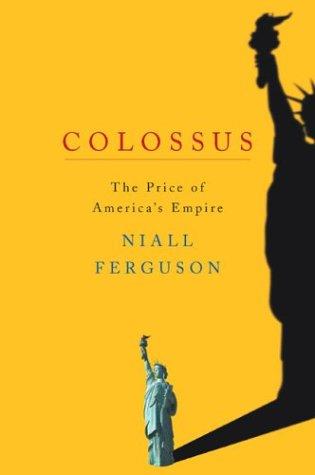 ColossusNiall Ferguson
 DoomNiall Ferguson
 EmpireNiall Ferguson
 Inside the House of MoneyNiall Ferguson
 Square and the TowerNiall Ferguson
 The Ascent of MoneyNiall Ferguson
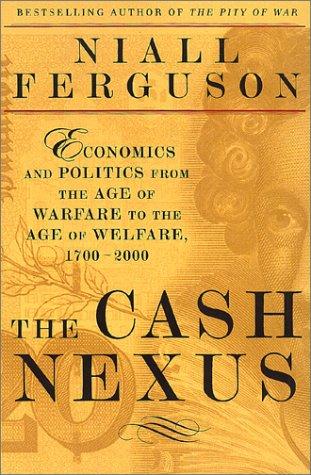 The cash nexusNiall Ferguson
 The House of Rothschild, Vol. 1Niall Ferguson
 The House of Rothschild, Vol. 2Niall Ferguson