The Intelligent Investor
≈ From memoryInvesting is the art of buying a business for less than its intrinsic value while maintaining a margin of safety to protect against human error and market volatility.
In one sentence
The difference between successful investing and disastrous speculation lies in the discipline to ignore market fluctuations and focus on the underlying value of an asset.
Why read this (and who it's for)
Most investors lose money because they treat the stock market like a casino, reacting emotionally to price movements rather than analyzing the business behind the ticker symbol. This book solves the "emotional volatility" problem by providing a rigorous framework for identifying intrinsic value and protecting yourself from being wrong.
Who benefits most:
- The "Emotional Investor" who finds themselves buying when everyone is excited and selling when everyone is panicked.
- The "Passive Investor" who wants a systematic way to ensure they aren't overpaying for popular stocks.
- Anyone who wants to understand the philosophy that taught Warren Buffett how to become one of the wealthiest men in history.
What you will be able to do: You will be able to look at a stock price, ignore the "noise" of the news cycle, and determine whether the price reflects a fair deal or an emotional hallucination.
The big idea
The central thesis of The Intelligent Investor is that Price $\neq$ Value. Because humans are governed by fear and greed, the market price of a stock will constantly fluctuate wildly away from its actual worth. Graham argues that an intelligent investor treats a stock not as a ticker symbol on a screen, but as a fractional ownership in a real business with physical assets, employees, products, and earnings power.
The logic follows a three-step progression:
- Identify Intrinsic Value: Determine what the business is actually worth based on its tangible assets and its ability to generate future earnings.
- Observe Market Behavior: Recognize that "Mr. Market" will constantly offer to buy or sell your shares at prices that are often wildly irrational.
- Apply a Margin of Safety: Because you can never be 100% certain about your valuation, only buy when the price is significantly lower than your calculated intrinsic value. This buffer protects you from both your own analytical errors and unexpected economic catastrophes.
Key ideas
Investment vs. Speculation
What it is — An investment is an operation which, upon thorough analysis, promises safety of principal and an adequate return. Speculation is buying something in the hope that the price will go up, without regard for the underlying value. Why it matters — If you don't distinguish between these two, you are gambling, not investing. Gambling relies on "luck" or "timing"; investing relies on "analysis" and "margin of safety." In the book — Graham argues that many people call themselves investors while they are actually speculating because they lack a systematic analysis of the business's financial health before buying.
Mr. Market
What it is — A metaphor for the stock market as a manic-depressive individual who offers to buy your shares or sell you his every day at different prices. Why it matters — It teaches you that volatility is not a threat; it is an opportunity. When Mr. Market is depressed (prices are low), you should consider buying. When he is manic (prices are high), you should consider selling. In the book — Graham illustrates that you are under no obligation to trade with him. You can ignore his moods and only deal with him when his prices are favorable to your goals.
Margin of Safety
What it is — The gap between the intrinsic value of a stock and the price you actually pay for it. Why it matters — It is the most important concept in the book. Since humans are fallible, you must assume that your valuation might be wrong or that a disaster might occur. A margin of safety ensures that even if your analysis is slightly off, you haven't overpaid so much that you will lose money. In the book — Graham suggests that if you think a stock is worth $100, buying it at $70 provides a 30% margin of safety to absorb errors in judgment or unforeseen economic downturns.
Intrinsic Value (Assets vs. Earnings)
What it is — The "true" value of a company, which Graham views as a combination of its net asset value (what you'd get if it closed today) and its earning power (what it will make tomorrow). Why it matters — Knowing how to calculate this prevents you from being seduced by "hype." If the earnings are falling but the price is rising because of a celebrity endorsement, the intrinsic value is dropping while the price is inflating. In the book — Graham emphasizes looking at the balance sheet (assets) and the income statement (earnings) to see if the business is actually producing profit or just moving numbers around.
Diversification
What it is — The practice of spreading investments across different industries and companies to minimize the impact of any single company failing. Why it matters — It is the only "free lunch" in finance. Because you cannot predict which specific company will succeed, owning a basket reduces the risk of being wrong about one specific choice. In the book — Graham argues that diversification is not just about owning many stocks; it's about ensuring those stocks aren't all tied to the same economic fate (e.g., don't own 10 different oil companies).
The Defensive Investment Strategy
What it is — A strategy for the "intelligent" but busy investor who doesn't have time to hunt for deep-value bargains every day. It involves buying high-quality, large-cap companies that meet specific criteria. Why it matters — Most people fail at value investing because they lack the patience or skill to find undervalued gems. This strategy allows you to be "safe" by sticking to established leaders while still maintaining a margin of safety. In the book — Graham provides a checklist for these companies: adequate size, financial strength, earnings, dividend record, and sales/profit growth.
Frameworks & tools
The Defensive Investor’s Checklist
Use this when selecting stocks to ensure you are buying "quality" rather than "hype." A stock should meet at least 5 of these criteria:
- Adequate Size: Large enough to be stable (not a tiny startup).
- Financial Strength: High ratio of current assets to current liabilities (liquidity).
- Earnings: Consistent growth in earnings over the past several years.
- Dividend Record: A history of paying dividends (shows management's commitment to shareholders).
- Sales/Profit Growth: Steady increase in sales and profits.
- Price: The most important factor—is the price reasonable relative to the other five factors?
The Margin of Safety Calculation
Before buying any stock, perform this mental check:
- Estimate Intrinsic Value: Look at the company's tangible assets + its expected earnings over the next 3–5 years.
- Identify Current Price: What is the market currently asking?
- Calculate the Gap: If (Intrinsic Value - Current Price) / Intrinsic Value > 30% (or your preferred margin), proceed with caution.
- The "Safety" Rule: Only buy if the price is significantly lower than your valuation, ensuring that even a mistake in your calculation won't lead to a ruinous loss.
Memorable examples & stories
Mr. Market
The Story: Imagine a partner who owns a share of a business with you. Every day he shouts out a price at which he would buy your share or sell you his. Some days he is wildly optimistic and asks for a huge price; other days he is terrified and offers a tiny price. The Lesson: The market's fluctuations are irrelevant to the value of the business. You only interact with him when his prices are useful to you.
Liquidation Value vs. Going Concern
The Story: Graham distinguishes between what a company is worth if it were sold off today (liquidation) and what it is worth as a continuing business (going concern). The Lesson: Many investors mistakenly value companies based only on their assets, ignoring the "earnings power" of the actual business operations.
The Speculator's Trap
The Story: Graham describes people who buy stocks because they saw a neighbor make money or because of a news headline, without ever looking at a balance sheet. The Lesson: If you don't know why you are buying (the analysis), you have no way to know when to sell, leaving you vulnerable to the market's emotions.
Key quotes
- "Investment ison basis of safety of principal and adequate return." (Paraphrased) Why it matters: It defines the goal: preservation of wealth comes before the pursuit of profit.
- "The intelligent investor is not concerned with predicting what happens in the future... but with ensuring that the investment is based on a margin of safety." (Paraphrased) Why it matters: It shifts your job from "fortune telling" to "risk management."
- "Mr. Market's moods are irrelevant to the value of the business." (Paraphrased) Why it matters: This is the ultimate psychological shield against panic selling or FOMO buying.
How to apply it
This week
- Audit your current holdings: Look at every stock you own and ask: "Am I holding this because of its intrinsic value, or because I'm afraid of missing out on a price move?"
- Identify one "Speculative" position: Find a stock in your portfolio that doesn't meet the "Defensive Investor" checklist (e.g., no dividend history, erratic earnings). Decide if you can justify its value or if it should be sold.
- Practice the "Mr. Market" meditation: The next time you see a headline about a market crash or a mooning stock, tell yourself: "That is just Mr. Market being manic/depressed. It doesn't change the value of my businesses."
Ongoing
- The 30% Rule: Never buy a stock unless it is trading at a significant discount to your calculated intrinsic value (the Margin of Safety).
- Ignore the Ticker: Stop checking your portfolio prices daily. Only look at them when you are considering a change in position.
- Focus on Fundamentals: Every quarterly report, read the "Earnings" and "Debt" sections before looking at the stock price.
Common pitfalls
- Analysis Paralysis: Trying to find the perfect undervalued stock can lead to doing nothing. Graham acknowledges that for most people, a diversified portfolio of high-quality "Defensive" stocks is better than trying to be an active value hunter.
- Ignoring the Margin of Safety: People often see a "cheap" stock and buy it immediately without calculating how much of a discount it actually is. A 5% discount is not a margin of safety; it's just a slightly better price.
- Confusing Price with Value: Just because a stock has gone down 50% doesn't mean it is "cheap." It might be cheap because the business is failing. You must check the fundamentals.
Connects to
- The Psychology of Money (Morgan Housel): Extends Graham’s ideas by focusing on the internal biases that make us act like Mr. Market's moods.
- Common Stocks and Uncommon Profits (Philcarinelli/Various): Explores the "earnings power" side of Graham's intrinsic value equation in more modern contexts.
- Margin of Safety (Various Value Investing texts): While not a single book, this concept is the bridge between Graham and Buffett.
If you remember only three things
- Price $\neq$ Value: The market price is an emotional reaction; the intrinsic value is a business reality.
- Mr. Market: Volatility is your friend, not your enemy. Use it to buy low and sell high.
- Margin of Safety: Always leave room for error by buying significantly below what you believe the business is worth.
Internalize it
-
Reflection questions
- When was the last time I bought a stock based on a "feeling" rather than an analysis of its assets and earnings?
- If Mr. Market offered to buy my entire portfolio right now at the current price, would I sell? If not, why am I holding it?
- Do I have a defined "Margin of Safety" for every stock I own, or am I just hoping the price goes up?
-
Flashcards Q: What is the difference between an investment and a speculation? A: An investment is based on thorough analysis and promises safety of principal; speculation is based on hope and timing. Q: Who is "Mr. Market"? A: A metaphor for market volatility, representing a manic-depressive individual who offers irrational prices daily. Q: What is a "Margin of Safety"? A: The gap between the intrinsic value of a stock and its current price, used to protect against analytical errors or economic disasters. Q: What are the 6 criteria for a Defensive Investment? A: Size, Financial Strength, Earnings, Dividend Record, Sales/Profit Growth, and Price. Q: Why is diversification important? A: It minimizes the impact of being wrong about any single company by spreading risk across different industries.
Fidelity note
I have a high confidence in this summary. The concepts of Mr. Market, Margin of Safety, and the distinction between Investment/Speculation are the bedrock of Graham's work and are universally accepted in value investing literature. I am less certain about specific "numbers" (like the exact percentage for a margin of safety) as Graham often argues these should be tailored to the individual's risk tolerance. Readers should verify the "Defensive Investor" checklist against the original text to see the nuances of what constitutes "adequate" size or strength.
Keep going — related reads
 Security AnalysisBenjamin Graham and David L. Dodd
 The Most Important ThingHoward Marks
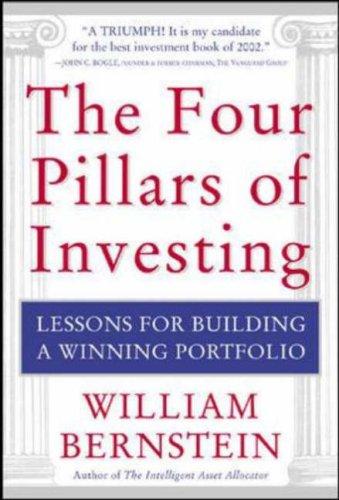 The Four Pillars of InvestingWilliam J. Bernstein
 The Bogleheads' Guide to InvestingTaylor Larimore, Mel Lindauer, and Michael LeBoeuf
 The Little Book That Still Beats the MarketJoel Greenblatt
 The Psychology of MoneyMorgan Housel
