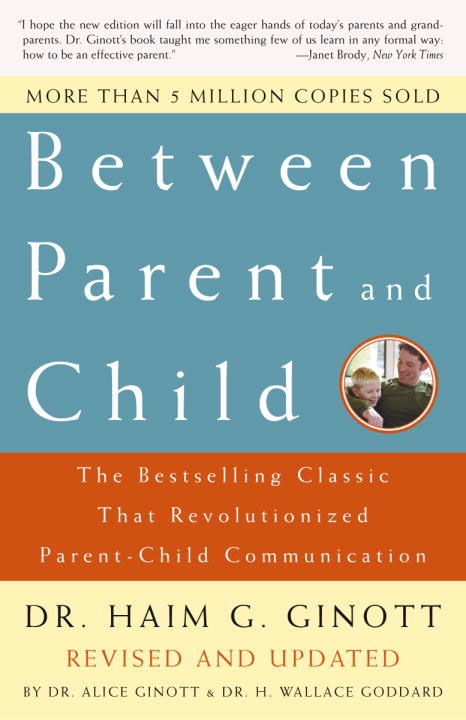
The Book You Wish Your Parents Had Read
≈ From memoryEffective parenting is not about managing a child's behavior; it is about understanding the developmental needs and emotional states driving that behavior, rooted in a secure attachment.
In one sentence
Children do not behave poorly to spite us; they act out because they lack the internal tools to manage their emotions, and our primary job as parents is to provide the "co-regulation" necessary for them to build those tools.
Why read this (and who it's for)
This book is for parents who feel exhausted by "difficult" children—those who seem defiant, anxious, or constantly pushing boundaries. It solves the frustration of the "discipline loop," where a parent punishes a behavior only to have the same behavior repeat itself a week later.
By reading this, you will shift from being a behavior manager (trying to control what a child does) to an emotional architect (understanding why a child feels). You will gain the ability to identify the specific developmental milestone a child is struggling with and provide the precise emotional scaffolding they need to move past it.
The big idea
The central thesis of Perry’s work is that parenting is fundamentally a relational act, not a pedagogical one. Most parents approach children as "projects" to be shaped or "problems" to be solved. Perry argues that this mindset creates a power struggle that actually inhibits the child's neurological development. When a child acts out, they are communicating a deficit in their ability to self-regulate.
The logic follows a biological path: A child’s brain is not fully formed; it relies on the parent as an external regulator of stress. If a parent reacts with anger or withdrawal (due to their own upbringing), the child's nervous system perceives a threat, triggering more distressual behavior. To break this cycle, the parent must first regulate themselves. Only when the parent is calm can they provide the "safe harbor" a child needs to process their emotions. Parenting, therefore, is less about "how to stop the screaming" and more about "how to become the person who can handle the screaming without losing their own composure."
Key ideas
Attachment Theory as Biological Foundation
- What it is — Attachment isn't just a psychological concept; it is a biological necessity for healthy brain development. It refers to the deep, enduring emotional bond between a child and their primary caregiver.
- Why it matters — If a child doesn't feel "held" emotionally (safe, seen, and understood), their nervous system remains in a state of high alert. This makes them more reactive, less able to learn, and prone to anxiety later in life.
- In the book — Perry explains how insecure attachment manifests as either "clingy" behavior (fear of abandonment) or "avoidant" behavior (shutting down), both of which are cries for a missing sense of safety.
The Developmental Arc (Autonomy vs. Shame)
- What it is — Children move through specific developmental milestones where they must "fight" for independence to develop a healthy sense of self. For example, a toddler must be defiant to figure out where they end and the parent begins.
- Why it matters — If a parent views this necessary developmental defiance as "bad behavior," they will suppress the child's growth. This leads to children who are either overly compliant (and lacking internal agency) or chronically rebellious.
- In the book — Perry highlights how parents often misinterpret a child’s need for autonomy as a personal attack on their authority, missing the opportunity to support the child's burgeoning identity.
The Neurobiology of Stress
- What it is — When a child is overwhelmed, their "upstairs brain" (logic, language) shuts down, and the "downstairs brain" (survival, fight/flight/freeze) takes over.
- Why it matters — You cannot reason with a child who is in a state of neurological hijack. Trying to lecture or punish a screaming toddler is like trying to give a map to someone who is currently drowning; they literally cannot process the information.
- In the book — Perry argues that we must recognize "meltdowns" as physiological events, not choices, and shift our goal from correction to calming.
Parental Blueprints (The Intergenerational Loop)
- What it is — Our parenting style is often a subconscious reaction to how we were raised. We carry "blueprints"—scripts of what we think a child should be like based on our own childhood wounds or successes.
- Why it matters — If you grew up in a household where emotions were suppressed, you may subconsciously punish your child for expressing them. Identifying these blueprints is the only way to break generational cycles of emotional unavailability.
- In the book — Perry encourages parents to look at their own "triggers." Why does my child's defiance make me so angry? Usually, it’s because it mirrors a feeling of powerlessness from our own past.
Co-regulation vs. Self-Regulation
- What it is — Children cannot self-regulate until they have been successfully co-regulated by an adult. Co-regulation is the process where a parent stays present and calm while a child is distressed, "borrowing" the parent's calm to soothe their own system.
- Why it matters — The goal of parenting isn't to make the child stop crying immediately; it's to be the steady presence that allows the child's nervous system to settle down naturally.
- In the book — Perry emphasizes that "staying in the room" is a literal tool. When we leave or yell, we break the co-regulation circuit.
Frameworks & tools
The Co-Regulation Loop
Use this checklist when your child is having a difficult moment to ensure you are providing the necessary scaffolding:
- Check Your Own Pulse: Is your heart racing? Are you clenching your jaw? If so, you cannot co-regulate. Take 30 seconds to breathe or step away (if safe) to lower your own cortisol.
- Identify the Need: Ask yourself, "What is this child trying to tell me?" (e.g., "I'm scared," "I'm frustrated I can't do this," "I need to be in control").
- Validate the Emotion: Use a simple phrase: "You're really frustrated that we have to leave." Do not try to "fix" it yet.
- Provide Physical/Emotional Presence: Stay close. Offer a hug or just sit nearby. Let them feel your calm.
- Wait for the "Downstairs Brain" to Reset: Once the intensity drops, then you can talk about what happened and how to handle it next time.
The "Pause" Technique (For Parents)
When you feel the urge to snap or punish:
- Name the Feeling: Say internally, "I am feeling overwhelmed/angry right now."
- Identify the Blueprint: Ask, "Is this my anger or my child's need?"
- The 5-Second Rule: Before speaking, count to five. This allows the prefrontal cortex (logic) to catch up with the amygdala (emotion).
Memorable examples & stories
The "Refusal" Story
A child refuses to eat dinner, leading to a power struggle where the parent tries every trick in the book. The Lesson: The child isn't being "difficult"; they are asserting autonomy over their body. Instead of forcing food (which reinforces the power struggle), the parent should acknowledge the child's desire for control while maintaining a calm, consistent boundary on what is served.
The "Anxious" Child
A child who is terrified of going to school and clings to the parent's leg, causing the parent to feel guilty or frustrated. The Lesson: This isn't manipulation; it’s an inability to manage fear. The parent needs to provide a "safe harbor"—acknowledging the fear ("I see how scary this feels") while slowly helping the child move toward the goal.
The "Parental Trigger" Moment
A story of a parent who loses their temper because their child is being "loud." The Lesson: The anger often stems from the parent's own history of having to be "quiet" or "good." Recognizing this allows the parent to offer the child the emotional freedom they were denied.
Key quotes
- "Children are not giving you a hard time; they are having a hard time." (Paraphrased) Why it matters: Shifts the perspective from accusation to empathy, which is the prerequisite for co-regulation.
- "Your child's behavior is their best communication of what they lack internally." (Paraphrased) Why it matters: Turns every tantrum into a diagnostic tool rather than a nuisance.
- "Parenting is the art of being the person your child needs you to be in their moment of highest distress." (Paraphrased) Why it matters: Defines the core job of parenting as emotional stability, not behavioral control.
How to apply it
This week
- Identify one "Trigger": Choose one specific behavior that makes you angry (e.g., whining, hitting, eye-rolling).
- Observe your body: The next time it happens, stop for three seconds and notice where you feel the anger in your body (chest, jaw, stomach). Just notice it without acting on it.
- Label one emotion: Once a day, when your child is upset, simply name the feeling they are having: "You're really frustrated," or "You look sad." Do not offer a solution; just label the feeling.
Ongoing
- The Co-Regulation Habit: Whenever your child is escalating, make it your primary goal to stay calm. If you find yourself yelling, stop, breathe, and restart the interaction from a place of calm.
- The "Need" Inquiry: Before reacting to a behavior, ask: "What developmental need is being expressed here?" (Autonomy? Safety? Connection?).
Common pitfalls
- Thinking Co-regulation means "Giving In": A common mistake is thinking that because we must stay calm and validate emotions, we can't have rules. Perry argues you can have firm boundaries (e.g., "I won't let you hit"), but the way you deliver that boundary must be from a place of regulated calm, not reactive anger.
- Over-intellectualizing: Parents sometimes try to "talk" a child out of a meltdown. If the child is in a high-stress state, their brain literally cannot process your words. You must move to physical/emotional presence first.
- Neglecting the Parent's Healing: The book implies that if a parent is deeply traumatized or emotionally unavailable, they will struggle to co-regulate. It acknowledges that some parents may need their own therapy to be able to provide the "safe harbor" required.
Connects to
- "The Whole-Brain Child" by Daniel Siegel: Extends the neurobiology of how children's brains develop and why emotional regulation is a skill that must be taught.
- "Attached" by Amir Levine: Provides the deeper clinical framework for how early childhood bonds dictate lifelong relationships.
If you remember only three things
- Children act out because they lack the internal tools to regulate their emotions; your job is to provide those tools via co-regulation.
- You cannot regulate a child's emotions until you have regulated your own.
- Every "bad" behavior is actually a communication of an unmet developmental need (usually autonomy, safety, or connection).
Internalize it
- Reflection questions
- When my child acts out in [specific way], what is the specific emotion they are likely feeling?
- What was my own upbringing like regarding emotional expression? How does that influence how I react to my child's emotions?
- In my last "blow up" with my child, what was the physical sensation in my body right before I lost my temper?
- Flashcards Q: What is the difference between a "behavioral" approach and an "emotional" approach to parenting? A: Behavioral focuses on stopping what the child does; emotional focuses on understanding why the child feels that way. Q: Why shouldn't you lecture a child who is currently having a meltdown? A: Because their "downstairs brain" (survival) has hijacked their "upstairs brain" (logic), making them unable to process complex information. Q: What is the goal of co-regulation? A: To provide a calm, safe presence that allows the child's nervous system to settle down so they can eventually learn to self-regulate. Q: How does "parental blueprint" affect parenting? A: Our own childhood experiences create subconscious scripts for how we react to our children's emotions (e.g., punishing them for being "too loud"). Q: What is the developmental purpose of a toddler's defiance? A: It is a necessary stage where they must assert autonomy to develop a sense of self-identity.
Fidelity note
I have high confidence in the core themes of this book, specifically the distinction between behavior management and emotional co-regulation, as well as the neurobiological basis for why children "melt down." I am moderately confident on specific anecdotes, as these are often used illustratively by Perry to describe common archetypes (the defiant toddler, the anxious child). Readers should verify the specific "Parental Blueprint" exercises against the text to ensure they are following her specific reflective prompts.