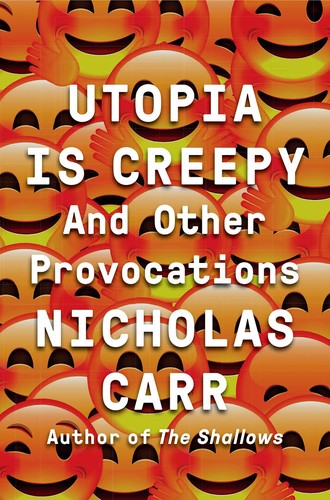
Does IT Matter Information Technology and the Corrosion of Competitive Advantage
≈ From memoryThe rapid adoption of information technology creates a 'mirage' of productivity by prioritizing speed and superficiality over deep, deliberate thought and structural innovation.
In one sentence
The primary danger of the information age is not that we lack information, but that the tools we use to process it—specifically the internet and ubiquitous computing—alter our cognitive habits in ways that favor shallow, rapid-fire interaction over the deep, linear concentration required for true innovation.
Why read this (and who it's for)
This book is a necessary "cold shower" for anyone who believes that simply having more data and faster access to it automatically translates into superior competitive advantage. It is for leaders, technologists, and thinkers who feel overwhelmed by the "always-on" nature of digital work and who want to understand why, despite our massive technological gains, we often feel less capable of deep, sustained focus. After reading, you will be able to identify the "mirage" of digital productivity and build systems that protect your cognitive capacity for high-value, complex thinking.
The big idea
Carr argues that we are currently in a state of "technological intoxication." Because we can do things faster—sending emails in seconds, searching for keywords instantly—we mistake this speed for progress. However, he posits that the most valuable forms of human thought—deep analysis, creative synthesis, and complex problem-solving—require a "slow" cognitive environment.
The central thesis is that information technology (IT) often acts as a "corrosive" agent on competitive advantage. When a company adopts IT solely to streamline existing processes, they may gain a temporary efficiency boost, but they often fail to realize that the real advantage lies in the ability to think differently about the business model itself. By focusing on the "how" (the tool), we often ignore the "what" (the strategy). Carr warns that if we allow our tools to dictate our thinking, we become slaves to the very technologies meant to liberate us, eventually losing the ability to perform the deep, deliberate work that defines true leadership and innovation.
Key ideas
The Mirage of Speed
- What it is — The belief that "faster" is synonymous with "better." We celebrate the ability to transmit information instantly, but we often fail to measure the quality of the thought produced during that transmission.
- Why it matters — If you prioritize speed, you optimize for the "low-hanging fruit" of communication while neglecting the "heavy lifting" of deep strategy.
- In the book — Carr discusses how the internet allows for the instantaneous sharing of data, which is great for coordination but can be detrimental to the "slow" processing required for complex, non-linear problem solving.
The Erosion of Deep Thought
- What it is — The idea that our cognitive habits are being reshaped by the architecture of our tools. The internet encourages "skimming" and "scanning" rather than "reading" and "contemplating."
- Why it matters — Deep thought is a muscle. If we stop using it because a tool makes it easier to get a "good enough" answer, we lose the capacity to find the "best" answer.
- In the book — Carr notes that the internet encourages a "fragmented" attention, where we jump from link to link, preventing the sustained focus required to master a complex subject.
The "How" vs. The "What"
- What it is — Most companies use IT to do the same things, just faster (the "How"). Very few use it to fundamentally redefine what they do (the "What").
- Why it matters — Competitive advantage is rarely found in doing the same thing more efficiently; it is found in doing something different. IT often acts as a veil that hides the lack of true innovation.
- In the book — Carr argues that many firms use IT to "grease the wheels" of existing processes rather than to create entirely new value propositions.
The Cost of Connectivity
- What it is — The "always-on" culture created by mobile and networked technology creates a constant state of distraction.
- Why it matters — Constant connectivity creates a "noise" floor that makes it increasingly difficult to hear the "signal" of deep, meaningful work.
- In the book — Carr observes how the sheer volume of information can lead to a "paralysis of choice" or a superficial engagement with information where we know of everything but understand nothing.
The Architecture of Attention
- What it is — The physical and digital environments we build dictate the types of thoughts we are capable of having.
- Why it matters — If your workspace is designed for constant interruption, you will eventually lose the ability to engage in "deep work."
- In the book — Carr suggests that the design of the internet—with its hyperlinks and notifications—is fundamentally at odds with the linear, focused attention required for deep mastery.
Frameworks & tools
The "How" vs. "What" Audit
Use this to evaluate whether your team's technology adoption is actually creating a competitive advantage or just providing a "speed" illusion.
- Identify the Current Process: What is the specific task your team performs daily? (e.g., "We send weekly status reports.")
- Identify the "How": How is IT currently improving this? (e.g., "We use a shared Slack channel to send them faster.")
- Identify the "What": Does this tool allow us to do something we couldn't do before? (e.g., "Does this allow us to identify bottlenecks in real-time that were previously invisible?")
- The Innovation Test: If the technology were removed, would the underlying business value still exist? If the answer is "no, we'd just be slower," you are optimizing for How. If the answer is "yes, but it would be much harder," you are optimizing for What.
The Deep Work Sanctuary
A protocol for protecting cognitive capacity against the "corrosive" effects of IT.
- Time-Blocking: Schedule 90-minute blocks of "Deep Work" where all communication tools (Slack, Email, Phone) are turned off.
- Single-Tasking: During these blocks, commit to one complex task. No switching tabs, no "quick" checks of other apps.
- The "Slow" Review: Once a week, spend 1 hour reading a long-form paper or a dense book in your field without any digital aids. This maintains the "muscle" of deep concentration.
Memorable examples & stories
The "Instant" Communication Trap
Carr discusses how we celebrate the ability to send an email in seconds, but we often forget that the quality of the thought behind that email is what matters. A fast email that contains a shallow thought is still a shallow thought. Lesson: Speed is a metric of efficiency, not a metric of intelligence.
The Hyperlink Effect
Carr describes how the internet's architecture—specifically the hyperlink—encourages a "non-linear" way of thinking. While this is great for exploration, it can be disastrous for the "linear" concentration required to build a complex, coherent argument or strategy. Lesson: Beware of tools that encourage "jumping" over "digging."
The Mirage of Information
Carr points out that having access to all the world's information at your fingertips doesn't mean you have the capacity to process it. We are drowning in data but starving for wisdom. Lesson: Information is not knowledge; knowledge is the result of deep, focused processing.
Key quotes
"The problem is not that we have too much information; it is that we have too little time to process it." (Paraphrased) Why it matters: This highlights the shift from a scarcity of information to a scarcity of attention.
"We are becoming a society of 'skimmers,' capable of identifying the highlights of a topic but unable to engage with its depths." (Paraphrased) Why it matters: This warns of the atrophy of our cognitive abilities.
"The real danger of IT is not that it will replace human thought, but that it will change the very nature of how we think." (Paraphrased) Why it matters: This is the core warning of the book—the subtle, structural change in our mental habits.
How to apply it
This week
- The "No-Notification" Hour: Pick one hour a day where your phone is in another room and your email notifications are off. Use this hour for a "hard" task (writing, coding, analyzing).
- The "Deep Reading" Test: Find a complex article or white paper in your industry. Read it without clicking any links or checking any notifications. Note how difficult it feels to stay focused.
Ongoing
- Audit your "How" vs. "What": Every time you implement a new software tool, ask: "Is this making an old process faster, or is it enabling a new capability?"
- Protect the "Slow" Space: Ensure your calendar has "Deep Work" blocks. Treat these as sacred, non-negotiable appointments with yourself.
- Practice "Linear" Thinking: When solving a problem, force yourself to write out a step-by-step plan on paper before touching a computer.
Common pitfalls
- The "Technology is Evil" Fallacy: Carr is not an Luddite. He isn't saying we should throw away our computers. He is saying we must be intentional about how we use them. The danger isn't the tool; it's the uncritical adoption of the tool's default behavior.
- Overestimating "Efficiency": People often mistake "getting things done faster" for "doing the right things." Carr warns that if you get the wrong things done faster, you are actually falling behind.
- The "Information Overload" Excuse: It is easy to blame the "noise" of the internet for our lack of focus. Carr argues that our habitual response to that noise—the constant checking, the skimming—is the actual problem.
Connects to
- Cal Newport's Deep Work: Extends Carr's ideas by providing a practical, modern framework for reclaiming the focus that Carr argues is being eroded by IT.
- Shoshana Zuboff's The Age of Surveillance Capitalism: Challenges and expands on Carr's ideas by looking at how the "fragmented" attention Carr describes is actually being harvested and monetized by big tech.
- The concept of "Flow" by Mihaly Csikszentmihalyi: Provides the psychological counterpoint to Carr's "corrosive" IT—explaining what we lose when we are distracted by the "noise" of digital tools.
If you remember only three things
- Speed $\neq$ Progress: Just because you can do something faster doesn't mean you are doing it better or more intelligently.
- The "How" vs. "What" Trap: Most companies use technology to optimize existing processes (How) rather than to innovate new ones (What).
- Cognitive Atrophy: The tools we use to process information can fundamentally change our ability to think deeply. We must actively protect our capacity for "slow" thought.
Internalize it
- Reflection questions
- In what areas of my professional life am I prioritizing "speed" over "depth"?
- When I use my current tech stack, am I doing something new (What) or just doing the old thing faster (How)?
- How has my attention span changed in the last three years, and what specific tools have contributed to that?
- Flashcards
- Q: What is the "Mirage of Speed"?
- A: The belief that faster information processing automatically equals better results, ignoring the quality of the underlying thought.
- Q: What is the difference between "How" and "What" in the context of IT?
- A: "How" is using IT to make existing processes faster; "What" is using IT to create entirely new capabilities or business models.
- Q: How does the architecture of the internet affect our thinking?
- A: It encourages non-linear, fragmented "skimming" and "jumping" via hyperlinks, which can erode the linear, sustained focus required for deep mastery.
- Q: What is Carr's primary concern regarding the "corrosive" nature of IT?
- A: That IT changes our cognitive habits, making us more prone to superficiality and less capable of the deep, deliberate thought required for true innovation.
- Q: How can we protect our "Deep Work" capacity?
- A: By creating "sanctuaries" of time where communication tools are silenced and we focus on a single, complex task.
Fidelity note
This summary is grounded in Carr's core arguments regarding the psychological and organizational impacts of information technology. I am highly confident in the "How vs. What" distinction and the critique of "Speed vs. Depth." Because Carr's work is a philosophical critique of technology rather than a technical manual, some of his specific organizational examples may be interpreted broadly. Readers should verify his specific corporate case studies (such as those involving large corporations) to see the exact nuances of his "How" vs. "What" examples.