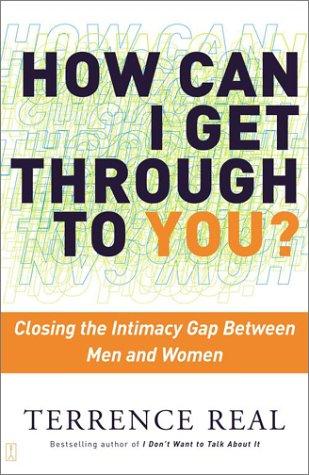
The New Rules of Marriage
≈ From memoryMarriage succeeds not by finding a perfect partner, but by developing the emotional intelligence to navigate the inevitable friction of two distinct individuals sharing a life.
In one sentence
The "New Rules" of marriage are rooted in Emotional Literacy: the ability to identify, express, and regulate your own emotions while acknowledging that your partner’s reactions are a valid reflection of their internal world, not a personal attack on you.
Why read this (and who it's for)
Most couples approach conflict as a "problem-solving" exercise—trying to find a logistical fix for a feeling-based problem. This book argues that until you address the underlying emotional architecture of your relationship, no logistical fix will stick.
This is for couples who find themselves in "circular" arguments (the same fight, different words), those who feel lonely even when sitting next to their partner, and anyone who wants to move from a "roommate" dynamic to a deeply connected, emotionally honest partnership. After reading, you will be able to identify your "emotional triggers," pause before reacting to your partner's behavior, and communicate your needs without resorting to blame.
The big idea
Terrence Real argues that the primary obstacle to a healthy marriage is emotional illiteracy. We are taught to be "polite" or "productive," but we are rarely taught how to sit with the uncomfortable, messy feelings that arise when two people become intensely intertwined. When we lack the vocabulary to describe our inner states, we default to "acting out"—which looks like criticism, withdrawal, sarcasm, or explosive anger.
The core thesis is that your partner's behavior is a map of their internal experience. Instead of asking, "How can I change them?" the "New Rules" demand you ask, "What is this behavior telling me about their unmet needs?" By shifting the focus from correction to connection, you break the cycle of reactive behavior.
The logic is simple: If you can name your feelings, you can regulate your reactions. If you can regulate your reactions, you can create a safe space for your partner to do the same. This creates a feedback loop of safety that allows for true intimacy.
Key ideas
The Difference Between Feeling and Acting
- What it is: Feelings are internal experiences (sadness, fear, inadequacy); actions are the external behaviors we use to manage those feelings (shouting, slamming doors, withdrawing).
- Why it matters: Most people think they are "angry" when they are actually "scared" or "hurt." If you address the anger, the root cause remains; if you address the fear, the behavior eventually changes.
- In the book: Real describes how a partner might "act out" by being overly critical of a spouse's housework. The anger is the surface; the underlying feeling is often a fear of being unsupported or unappreciated.
The "Cycle" of Interaction
- What it is: Couples often get stuck in a repetitive loop where Partner A's behavior triggers Partner B, whose reaction then reinforces Partner A's original behavior.
- Why it matters: Recognizing the cycle as a third entity—something you are both fighting against—rather than a war between two people, allows you to team up against the pattern.
- In the book: Real illustrates how a "pursuer-distancer" dynamic works: one partner pushes for connection (often through criticism), the other feels overwhelmed and pulls away, which makes the first partner push harder.
Emotional Literacy as a Skill
- What it is: The ability to identify, name, and express emotions in real-time without being overwhelmed by them.
- Why it matters: You cannot manage what you cannot name. If you can't distinguish between "I'm annoyed" and "I'm feeling lonely," you can't effectively ask for what you need to feel less lonely.
- In the book: Real emphasizes the importance of "feeling words" over "judgment words." Instead of saying "You're so lazy," the rule is to say, "I feel overwhelmed and lonely when the kitchen is messy."
The Role of "The Other"
- What it is: Acknowledging that your partner is a separate human being with a completely different internal history, set of triggers, and emotional landscape.
- Why it matters: We often treat our partners as extensions of ourselves. When they don't act the way we think they should, we feel betrayed. Recognizing their autonomy reduces the "shoulds" that fuel resentment.
- In the book: Real argues that we must hold the "dual reality"—your experience of the event is true, and their experience of the same event is also true, even if they contradict each other.
Vulnerability as the Foundation of Connection
- What it is: The willingness to show up as "unfinished" and "unprotected" in front of your partner.
- Why it matters: Conflict often arises because we are trying to protect our egos. Vulnerability is the only way to stop the defensive cycle.
- In the book: Real explains that when we are "safe" enough to say "I'm scared" instead of "You're a jerk," the defensive walls come down, and real intimacy becomes possible.
Frameworks & tools
The "Pause and Pivot" Technique
When you feel the urge to react (criticize, yell, or shut down), use this 3-step process:
- The Pause: Physically stop. Take a breath. Identify the physical sensation in your body (tight chest, hot face, clenched fists).
- The Identification: Ask yourself, "What am I feeling right now?" (e.g., "I feel ignored," "I feel inadequate," "I feel overwhelmed.")
- The Pivot: State the feeling to your partner without blaming them. Use the formula: "I am feeling [Emotion] because [Context], and what I need is [Action]."
The "Dual Reality" Check
Use this when you are stuck in a "he-said/she-said" loop:
- State your truth: "From my perspective, I felt hurt when you said X."
- Acknowledge their truth: "And I want to hear your perspective. What was happening for you in that moment?"
- Listen without defending: Do not interrupt. Listen for the feeling behind their words.
- Validate: "I can see how you felt [Emotion] when [Action] happened." (Validation is not agreement; it is acknowledging their reality.)
Memorable examples & stories
The "Kitchen Counter" Conflict
A couple argues constantly about dishes. The man feels criticized; the woman feels unsupported. The Lesson: The dishes are never the problem. The problem is a lack of emotional safety. The woman needs to know her partner sees her hard work; the man needs to know he is capable of being a good partner.
The "Withdrawal" Loop
A woman expresses a need for more attention; the man feels pressured and retreats into his phone. The woman feels abandoned and gets louder; the man retreats further. The Lesson: Withdrawal is a defense mechanism against feeling inadequate. To break it, the man must learn to say, "I'm feeling overwhelmed right now, can we talk in 20 minutes?" instead of just disappearing.
The "Criticism" Trap
A man constantly makes "jokes" about his wife's weight. He claims he's just being funny. She feels insulted. The Lesson: "Humor" is often a shield for a fear of intimacy or a way to express a grievance without taking responsibility for the words. The "New Rule" is to stop using humor to avoid the hard conversation.
Key quotes
"The goal is not to win the argument; the goal is to understand the experience of the other." (Paraphrased) Why it matters: It shifts the metric of success from 'victory' to 'connection.'
"Your partner's behavior is a map of their internal world, not a critique of your worth." (Paraphrased) Why it matters: This removes the personal sting of criticism and turns it into a diagnostic tool.
"Emotional literacy is the ability to name the feeling so that the feeling doesn't name you." (Paraphrased) Why it matters: It empowers the individual to regain agency over their reactions.
How to apply it
This week
- The "Feeling" Audit: Once a day, identify one emotion you felt (not an action you took). Just name it: "I felt frustrated," "I felt proud," "I felt lonely."
- The "No-Blame" Communication: Practice saying one thing you need without using the word "You" to start the sentence. (e.g., instead of "You never help," try "I'm feeling overwhelmed and I'd love some help with dinner.")
- The 10-Second Pause: Before responding to a criticism or a jab from your partner, count to ten. Ask yourself: "What is the feeling under this?"
Ongoing
- The "Check-In" Ritual: Spend 10 minutes every evening asking, "How was your inner world today?" and "Is there anything I can do to make you feel more supported?"
- The "Dual Reality" Rule: In every argument, commit to acknowledging the other person's feelings before defending your own.
- Emotional Vocabulary Expansion: Actively work to find more nuanced words for your feelings (e.g., instead of "mad," use "dismissed," "anxious," or "overlooked").
Common pitfalls
- The "Fix-It" Trap: Many readers will try to apply these rules as a "to-do" list to fix their partner. The book warns that this won't work. You can only change your own emotional literacy.
- Over-Intellectualizing: It is easy to understand the theory of emotional literacy while still reacting in the heat of the moment. The practice must be repetitive and "muscle-memory" based.
- The "Validation" Misconception: Readers often think validating means "admitting I was wrong." No, validation means "I see that you felt that way." You can validate a feeling without agreeing with the interpretation of the facts.
Connects to
- The Gottman Method: Real’s work complements the Gottman's research on "bids for connection" and "the four horsemen," providing the internal emotional work required to sustain those connections.
- Nonviolent Communication (Marshall Rosenberg): Both emphasize the importance of "needs" and "feelings" over "demands" and "judgments."
- Attached Theory (Amir Levine): Real's work provides the practical tools for those who may have an "anxious" or "avoidant" attachment style to find safety in their primary relationship.
If you remember only three things
- Feelings vs. Actions: Your behavior is a reaction to a feeling you haven't named yet.
- The Cycle: You and your partner are a team against the cycle of interaction, not against each other.
- Dual Reality: Both of you can be "right" in your own experiences of the same event.
Internalize it
- Reflection questions
- When I get angry with my partner, what is the "softer" emotion (fear, hurt, loneliness) that usually sits underneath that anger?
- What is a recurring "cycle" we fall into? (e.g., I criticize, they withdraw, I get louder). How can we name this cycle together?
- How often do I use "You" statements to start a conversation when I am actually trying to express a personal need?
- Flashcards Q: What is the difference between a feeling and an action? A: A feeling is an internal experience (e.g., sadness); an action is an external behavior used to manage that feeling (e.g., slamming a door).
Q: What is the "Dual Reality" principle? A: The recognition that both partners' experiences of a situation are valid, even if they contradict each other.
Q: How do you break a "cycle" of interaction? A: By identifying the pattern as a third entity and working together to interrupt it, rather than attacking each other.
Q: What is the goal of "Emotional Literacy"? A: To be able to identify, name, and express emotions so that the feelings do not dictate your reactions.
Q: What is the "Pause and Pivot" technique? A: A 3-step process: Pause (stop the reaction), Identify (name the feeling), and Pivot (express the feeling and the need without blame).
Fidelity note
This summary is based on Terrence Real's core teachings on emotional literacy and the "New Rules" of relational dynamics. I am highly confident in the concepts of "Feeling vs. Acting," "The Cycle," and "Dual Reality," as these are the hallmarks of his clinical approach. I have synthesized his practical tools (like the Pause and Pivot) into actionable steps based on his common therapeutic frameworks. Readers should verify specific "homework" exercises in the book for a more structured clinical experience.