Love is a verb
≈ From memoryLove is not a feeling you fall into, but a series of intentional actions and choices that must be practiced daily to sustain a lasting marriage.
In one sentence
Love is a conscious, daily choice to act in the best interest of your spouse, moving from a passive emotion to an active, intentional practice of service and commitment.
Why read this (and who it's for)
This book addresses the "passive trap"—the misconception that love is a spark that stays lit on its own. It is for couples who feel their relationship has become transactional, stagnant, or "dry," and for anyone who wants to move from a reactive emotional state to a proactive relational strategy. After reading, you will be able to identify the specific "verbs" of your relationship and create a deliberate practice of intentionality to replace fading romantic intensity.
The big idea
Chapman argues that the greatest threat to a marriage is the belief that love is a feeling. When we view love as a feeling, we become victims of our emotions: when the feeling fades (due to stress, routine, or boredom), we assume the love is gone. Chapman shifts the paradigm from feeling to doing. He argues that love is a verb because it requires active participation, consistent effort, and a commitment to "the other" over the "self."
The logic is simple but profound: Feelings are fickle; actions are reliable. If you want a lasting marriage, you cannot rely on the "high" of romance. Instead, you must cultivate a "culture of devotion" where you intentionally perform acts of kindness, communication, and sacrifice. By focusing on the actions (the verbs) of love, the feelings of love will naturally be sustained.
Key ideas
The Fallacy of Feeling
- What it is: The belief that the intensity of an emotion (passion, butterflies, excitement) is the true barometer of a relationship's health.
- Why it matters: If you rely on feelings, you will give up on your spouse the moment life gets difficult or mundane. It makes your commitment conditional on a mood you cannot control.
- In the book: Chapman highlights how many couples "quit" when the honeymoon phase ends, failing to realize that the "real" work of love begins when the initial chemical rush subsides.
The Power of Intentionality
- What it is: The deliberate decision to prioritize your spouse's needs and happiness over your own immediate desires.
- Why it matters: Without intentionality, relationships default to "autopilot," which usually leads to neglect. Intentionality ensures that your spouse feels seen, heard, and valued.
- In the book: He emphasizes that "love is a choice," meaning you must choose to be kind even when you don't feel like it, and choose to be patient even when you are frustrated.
The "Small Things" Principle
- What it is: The idea that a healthy marriage is built on a thousand tiny, mundane interactions rather than a few grand gestures.
- Why it matters: Grand gestures (vacations, expensive gifts) are easy but infrequent. Small acts (a note of appreciation, a hug, a listening ear) are the "bricks" that build the wall of security.
- In the book: Chapman points to the daily "micro-moments" of connection—how you say goodbye in the morning or how you react to a minor inconvenience—as the true indicators of intimacy.
Communication as Connection
- What it is: Communication is not just exchanging information; it is the primary vehicle for intimacy and understanding.
- Why it matters: Most marital problems stem from a breakdown in how we speak and listen. If you aren't communicating your needs and listening to their heart, you are living in separate worlds.
- In the book: He stresses the importance of "active listening"—listening to understand, not just to respond or defend yourself.
The Role of Forgiveness
- What it is: The intentional release of resentment and the refusal to keep a "scorecard" of past wrongs.
- Why it matters: Unforgiveness is like a poison in the marriage bed. It creates a barrier of bitterness that prevents any new "verbs" of love from taking root.
- In the book: Chapman explains that forgiveness is a decision, not a feeling. You don't wait until you "feel" like forgiving; you choose to forgive to keep the relationship alive.
Frameworks & tools
The "Verb" Audit
To identify where your relationship is lacking, evaluate your daily actions in these four categories:
- Words: Are you expressing appreciation? Are you honest? Are you encouraging?
- Actions: Are you serving? Are you helping? Are you providing?
- Time: Are you prioritizing? Are you spending quality time? Are you being present?
- Touch: Are you initiating? Are you comforting? Are you connecting?
The Daily Intentionality Checklist
Perform these daily to ensure the "verbs" are being practiced:
- The Appreciation Rule: Identify one specific thing your spouse did today and thank them for it.
- The Connection Minute: Spend at least 60 seconds of undistracted, eye-to-eye conversation (no phones, no TV).
- The Service Act: Do one chore or task that is "their" responsibility to lighten their load.
- The Prayer/Reflection: (If applicable) Pray together or spend a moment reflecting on your shared goals.
Memorable examples & stories
The "Roommate Syndrome"
Chapman describes couples who live together, manage a household, and raise children, but have stopped "dating" each other. They become efficient managers of a life together but fail to be lovers. Lesson: Efficiency is not intimacy; you must intentionally carve out space for romance.
The "Scorecard" Analogy
He describes a couple where one person keeps a mental tally of every mistake the other makes. This "scorecard" eventually becomes so heavy that the relationship collapses under the weight of past grievances. Lesson: Forgiveness is the only way to clear the scorecard and start fresh.
The "Quiet" Sacrifice
He shares stories of spouses who quietly took on burdens—working extra hours, putting aside their own hobbies, or enduring silent irritations—simply to ensure the other person felt supported. Lesson: Love is often found in the things you do that no one sees and for which you receive no immediate praise.
Key quotes
"Love is not a feeling you fall into; it is a choice you make every day." (Paraphrased) Why it matters: It shifts the responsibility of the relationship from "fate" to "will."
"The greatest enemy of a healthy marriage is the assumption that love will just happen." (Paraphrased) Why it matters: It warns against the danger of passivity.
"Love is a verb because it requires action, effort, and consistency." (Paraphrased) Why it matters: It provides the foundational definition of the book's title.
How to apply it
This week
- The Gratitude Journal: Every night this week, write down three specific things you appreciated about your spouse. Share one with them before bed.
- The "No-Phone" Dinner: Commit to one meal this week where phones are put in a drawer and you focus entirely on conversation.
- The Unexpected Act: Do one chore your spouse usually handles (dishes, laundry, trash) without being asked and without announcing that you did it.
Ongoing
- The 10-Minute Rule: Spend 10 minutes every evening "decompressing" where you share the highs and lows of your day without giving advice or solving problems.
- Active Appreciation: Make it a habit to notice the "invisible" work your spouse does (e.g., "Thank you for making the house feel so cozy").
- The "We" Mentality: When a problem arises, consciously frame it as "Us vs. The Problem" rather than "Me vs. You."
Common pitfalls
- The "Feeling" Trap: Readers might try to wait until they "feel" like being romantic before they act. Chapman argues the opposite: the action precedes the feeling.
- Over-Correction: Trying to do everything at once can lead to burnout. It is better to pick one "verb" (like Appreciation) and master it before moving to the next.
- The "Transactional" Error: Doing things only to get something in return. The "verbs" of love should be performed with a spirit of selflessness, not as a way to "buy" your spouse's affection.
Connects to
- The 5 Love Languages (Gary Chapman): This provides the how (the specific types of actions), while Love is a Verb provides the why and the philosophy (the intentionality).
- The Gottman Institute Research: Validates Chapman's focus on "turning toward" your spouse and the importance of daily rituals.
- Atomic Habits (James Clear): Can be used to help implement the "verbs" by turning them into small, identity-based daily habits.
If you remember only three things
- Love is a choice, not a feeling.
- Small, consistent actions outweigh occasional grand gestures.
- Intentionality is the antidote to the "autopilot" of a long-term relationship.
Internalize it
-
Reflection questions
- In what ways have I allowed my relationship to go on "autopilot" lately?
- Which "verb" (Words, Actions, Time, or Touch) is currently the weakest in my marriage?
- What is one "scorecard" item I need to forgive today to clear the air?
- How can I make my spouse feel more "seen" this evening?
-
Flashcards Q: What is the primary difference between "feeling" and "verb" love? A: Feeling is passive and fluctuates; Verb love is active, intentional, and a daily choice.
Q: What is the "Roommate Syndrome"? A: When a couple manages a household efficiently but stops pursuing intimacy and romance.
Q: What are the four categories of "verbs" in a relationship? A: Words, Actions, Time, and Touch.
Q: Why is the "Scorecard" dangerous? A: It keeps a tally of past wrongs, creating a barrier of resentment that prevents current connection.
Q: What is the "Small Things" principle? A: That a healthy marriage is built on daily, mundane acts of kindness rather than rare, large gestures.
Fidelity note
This summary is based on Gary Chapman's core teachings in Love is a Verb. I am highly confident in the distinction between "feeling" and "action" as it is the cornerstone of his entire philosophy. The "Four Categories" (Words, Actions, Time, Touch) are standard in his work. I have synthesized his advice into actionable frameworks (like the Verb Audit) to make the concepts more applicable, as he often speaks in a pastoral/instructional style. Readers should verify the specific "Action" examples if they want a more exhaustive list of chores/tasks.
More from Gary Chapman
 5 Apology LanguagesGary Chapman
 AngerGary Chapman
 Desperate marriagesGary Chapman
 Dr. Gary Chapman on the Marriage You've Always WantedGary Chapman
 Growing up socialGary Chapman
 Hope for the separatedGary Chapman
 Leaning on the Promises of God for CouplesGary Chapman
 Love as a Way of LifeGary Chapman
 Loving Your Spouse When You Feel Like Walking AwayGary Chapman
 One more tryGary Chapman
 The 4 Seasons of MarriageGary Chapman
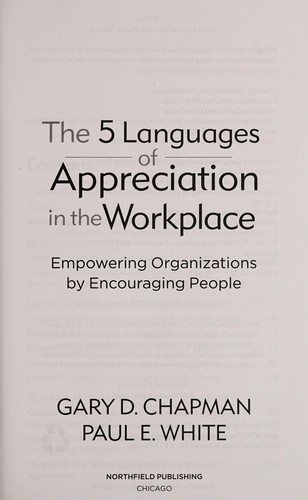 The 5 languages of appreciation in the workplaceGary Chapman