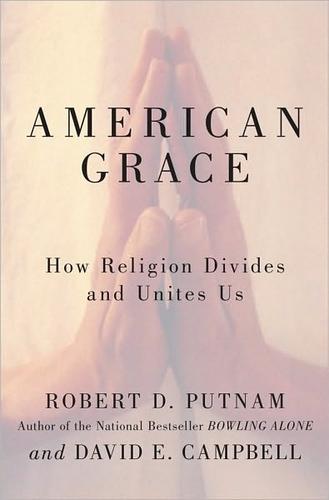
The Upswing
≈ From memoryThe decline of American civic life is not a result of individual selfishness, but of a systemic collapse in 'social infrastructure'—the physical and social spaces that allow us to communicate, cooperate, and belong.
In one sentence
The health of a democracy depends on "social infrastructure"—the shared spaces and habitual interactions that build trust, create common ground, and allow diverse people to see one another as neighbors rather than enemies.
Why read this (and who it's for)
This book addresses the "loneliness epidemic" and the paralyzing polarization of modern life. It is for anyone who feels that the "public square" has vanished—whether you are a community organizer, a leader trying to manage a fractured team, or an individual feeling alienated from their neighbors. After reading, you will be able to identify the "social infrastructure" in your own neighborhood and apply specific strategies to rebuild trust and collective action in your local community.
The big ideas
Putnam argues that the crisis of modern life is a crisis of connection. We have traded "thick" community (deep, face-to-face, local ties) for "thin" connections (digital, transactional, and fleeting). While we are more "connected" than ever via technology, we are socially atomized. This isn't just a personal tragedy; it is a civic catastrophe. When we stop interacting with people who are different from us, our empathy muscles atrophy, and our political discourse becomes a blood sport.
The core thesis is that social infrastructure is the "connective tissue" of a functioning society. It includes the parks, libraries, cafes, and community centers, but more importantly, it includes the habits of interaction those places foster. Putnam argues that we must move from a "me" culture to a "we" culture by intentionally designing spaces where people are forced to interact, cooperate, and find common ground. It is a call to move beyond "tolerance" (which is passive) toward "engagement" (which is active).
Key ideas
The Collapse of Social Infrastructure
- What it is — The physical and social environments (parks, community centers, local clubs) that facilitate regular, face-to-face interaction between neighbors.
- Why it matters — Without these spaces, we lose the "third places" where people from different walks of life mingle, leading to a society of silos where we only interact with people who mirror our own views.
- In the book — Putnam points to the decline of local civic organizations and the "privatization" of public life, where we retreat into gated communities or digital echo chambers.
The "Bowling Alone" Effect
- What it is — The phenomenon where individuals participate in activities (like bowling) but do so alone, rather than with a team or group.
- Why it matters — It highlights the difference between activity and community. You can be "busy" without being "connected." True social capital requires collective participation.
- In the book — Putnam uses the metaphor of bowling to show how we can be physically present in a public space but socially isolated from the people around us.
The Difference Between Tolerance and Engagement
- What it is — Tolerance is the "live and let live" attitude of ignoring others; engagement is the active, sometimes messy work of working together toward a common goal.
- Why it matters — Tolerance allows for coexistence, but only engagement builds the trust necessary to solve collective problems like infrastructure, education, or safety.
- In the book — Putnam argues that we need "pro-social" interactions where people of different backgrounds work together on a shared project, like a community garden or a neighborhood watch.
The Role of "Weak Ties"
- What it is — The casual acquaintances we make with the barista, the librarian, or the neighbor—people who aren't our "best friends" but provide a sense of belonging and information.
- Why it matters — While "strong ties" (family, close friends) provide emotional support, "weak ties" are the glue of a functioning society; they bridge different groups and expand our social horizons.
- In the book — Putnam emphasizes that a healthy democracy requires a wide net of weak ties to ensure we aren't just living in a bubble of our own making.
The "Common Good" as a Practice
- What it is — The idea that the "common good" isn't a destination we reach, but a practice we maintain through consistent, local action.
- Why it matters — If we stop practicing the common good, we lose the ability to sustain a democracy. It requires "civic muscles" that must be exercised regularly.
- In the book — He highlights how local projects—like cleaning up a park or organizing a neighborhood festival—build the trust required for larger-scale democratic participation.
Frameworks & tools
The Social Infrastructure Audit
Use this to evaluate the health of your community or workplace.
- Physical Access: Are there places where people can gather without being expected to spend money? (e.g., a public plaza vs. a private cafe).
- Frequency of Interaction: How often do people from different backgrounds cross paths? Is it a daily occurrence or a rare event?
- Shared Purpose: Is there a "common good" project currently active? (e.g., a community garden, a book club, a local sports team).
- Diversity of Interaction: Do these spaces bring together people of different ages, races, and socioeconomic statuses, or do they reinforce existing silos?
The "Common Ground" Strategy for Conflict
When faced with a polarized situation, move from argument to action.
- Identify a Shared Goal: Find a "superordinate" goal (e.g., "How do we make this park safer for kids?") that requires cooperation from both sides.
- Create a Shared Task: Design a project that requires physical cooperation (e.g., a community cleanup day).
- Focus on Proximity: Ensure the interaction happens in a physical space where people can see each other's humanity.
- Build "Small Wins": Focus on immediate, tangible improvements to build the trust necessary for larger, more complex conversations.
Memorable examples & stories
The "Bowling Alone" Metaphor
Putnam describes the shift from team-based sports to individual pursuits. It illustrates how we can be "active" but socially isolated. Lesson: Participation in a public space is not the same as community building; we must seek out the "team" aspect of life.
The Decline of the "Main Street"
Putnam discusses how the disappearance of local businesses and gathering places has left a vacuum in our social lives. Lesson: When we lose our "third places," we lose the spontaneous interactions that keep a democracy healthy.
The Power of the Community Garden
He highlights how a simple garden can act as a "social glue," bringing together neighbors who might otherwise never speak. Lesson: Shared labor on a common project is one of the most effective ways to break down prejudices and build trust.
Key quotes
"The crisis of our time is a crisis of connection." Why it matters: It shifts the blame from individual "bad actors" to a systemic lack of social infrastructure.
"Tolerance is not enough. We need engagement." (Paraphrased) Why it matters: It challenges the passive approach to diversity and argues for active, collaborative participation.
"Social infrastructure is the connective tissue of a functioning society." (Paraphrased) Why it matters: It provides a visual metaphor for why physical spaces and social habits are essential for democracy.
How to apply it
This week
- The "Third Place" Visit: Go to a local library, park, or community center. Spend 30 minutes just observing the interactions. Who is there? Who is missing?
- The "Weak Tie" Outreach: Identify one person in your neighborhood you recognize but don't know (a neighbor, a shop owner). Make a point to say hello and ask a non-transactional question (e.g., "How's your day going?").
- Identify a Local Need: Look for a physical space in your neighborhood that is neglected (a dirty park, a messy sidewalk). Note it down as a potential "common good" project.
Ongoing
- Prioritize "Pro-Social" Activities: When choosing hobbies or volunteer work, prioritize those that involve a group and a shared goal over solitary activities.
- Advocate for Social Infrastructure: When local planning decisions are made, ask: "How does this promote social interaction?" Support libraries, parks, and community centers.
- Practice "Active Listening" in Public: When you encounter someone with a different view, resist the urge to "win" the argument. Instead, try to understand their underlying concerns and shared needs.
Common pitfalls
- The "Digital Fallacy": Thinking that social media replaces social infrastructure. Putnam argues that while digital tools can facilitate connection, they cannot replace the "thick" interaction of physical space.
- Overestimating "Tolerance": Thinking that simply "being nice" to people you disagree with solves the problem. Putnam argues that without shared action, the underlying causes of polarization remain unaddressed.
- The "Individualist Trap": Trying to solve a systemic lack of social infrastructure through purely individual acts of kindness. While kindness matters, the solution requires systemic changes to how we design our communities.
Connects to
- Bowling Alone (Putnam): The foundational work that established the concept of social capital.
- The Righteous Mind (Jonathan Haidt): Explores the moral psychology behind why we disagree so much, providing a psychological complement to Putnam's sociological focus on infrastructure.
- Eviction (Matthew Desmond): Explores how the destruction of housing and neighborhood stability contributes to the erosion of social capital.
If you remember only three things
- Social infrastructure (physical spaces + social habits) is the foundation of a healthy democracy.
- Engagement (working together on a common goal) is the only cure for the polarization caused by a lack of interaction.
- Weak ties and shared "third places" are essential for creating a sense of belonging in a diverse society.
Internalize it
-
Reflection questions
- Where in my daily routine have I replaced a "thick" social interaction with a "thin" digital one?
- If I were to design a "third place" for my neighborhood, what would it look like and who would it serve?
- What is a "common good" project in my community that I could contribute to this month?
- How does my current social circle reflect a "bubble," and what "weak ties" could I build to break it?
-
Flashcards Q: What is "social infrastructure"? A: The physical and social environments (parks, libraries, clubs) that facilitate regular, face-to-face interaction and community building.
Q: What is the difference between "thick" and "thin" connections? A: Thick connections are deep, face-to-face, and local; thin connections are often digital, transactional, and fleeting.
Q: Why is "bowling alone" a problem? A: It represents activity without community; it shows that you can be physically present in a space without actually engaging with the people around you.
Q: What is the difference between tolerance and engagement? A: Tolerance is passive (living and letting live); engagement is active (working together toward a shared goal).
Q: What are "weak ties"? A: Casual acquaintances (baristas, neighbors) who provide a sense of belonging and bridge different social groups.
Q: What is the "common good" in Putnam's view? A: A practice of collective action and shared responsibility, rather than a static goal.
Q: What is the "crisis of connection"? A: The systemic collapse of social infrastructure that leads to loneliness, polarization, and the erosion of democratic life.
Fidelity note
This summary is grounded in Robert Putnam's core arguments regarding social capital and the importance of physical/social infrastructure. I am highly confident in the distinction between "tolerance" and "engagement" and the "Bowling Alone" metaphor. The specific "Social Infrastructure Audit" and "Common Ground Strategy" are synthesized frameworks based on his recommendations for community building, as he does not provide a rigid, numbered checklist in the text. Readers should verify the specific local examples of "social infrastructure" projects mentioned in the book to see which are most applicable to their specific geography.