Conversational style
≈ From memoryCommunication is not just about the words we say, but the invisible social rules and 'cultural' styles we use to build, maintain, and negotiate our relationships.
In one sentence
Communication is a complex social dance where the primary goal is often not the exchange of information, but the maintenance of social bonds and the navigation of interpersonal power dynamics.
Why read this (and who it's for)
Most people believe communication is a transparent pipe: I say X, you hear X. Tannen proves that this is a myth. We are constantly navigating "hidden" rules of turn-taking, overlapping, and silence. This book is for anyone who feels frustrated by "misunderstandings" in relationships—specifically those who want to understand why people say one thing but mean another, and how to navigate the different "dialects" of conversation (such as those between genders or different social groups). After reading, you will be able to identify the function of a conversation (e.g., "Is this person seeking validation or information?") rather than just reacting to the literal words spoken.
The big idea
Tannen argues that conversation is a "cultural" activity. Just as we learn a native language, we learn a "conversational style" from our families and social circles. This style dictates how we use silence, how much we overlap in speech, and how we use "report" (facts) versus "report" (feelings).
The core thesis is that meaning is not in the words; it is in the interaction. Because we often use the same words to mean different things depending on the context, we must look at the mechanics of the interaction to understand the intent. For example, a "How are you?" is rarely a request for a medical report; it is a ritualistic acknowledgment of presence. To understand communication, you must stop looking at the content and start looking at the process.
Key ideas
The Distinction Between Report and Report
- What it is — "Report" refers to the literal information conveyed (the "what"), while "Report" (often referred to as the social/relational aspect) refers to the feelings and social nuances behind the words.
- Why it matters — If you only listen for the "report" (the facts), you will constantly miss the point of the interaction. If someone says, "The dinner was nice," they might be saying "I'm glad we spent time together," not "The seasoning was perfect."
- In the book — Tannen explores how people use "report" to navigate social obligations, where the goal is to maintain the relationship rather than to convey data.
Conversational Overlap
- What it is — Overlapping is the act of two people speaking at once. In some cultures and contexts, this is a sign of engagement and "cooperative overlapping"; in others, it is an aggressive "competitive" interruption.
- Why it matters — Understanding why someone is interrupting helps you determine if they are trying to contribute to the flow (cooperative) or seize control of the floor (competitive).
- In the book — Tannen observes how different groups (like women vs. men or different ethnic groups) use overlapping differently. For some, it’s a way to show "I'm listening," while for others, it's a way to "get a word in."
The Function of Silence
- What it is — Silence is not a "void" in conversation; it is a meaningful communicative tool used to signal agreement, discomfort, reflection, or a desire to end an interaction.
- Why it matters — We often feel awkward in silence and rush to fill it, but silence can be a powerful way to give the other person space or to signal that a boundary has been reached.
- In the book — Tannen analyzes how silence can be used to "soften" a request or to signal that a topic is off-limits.
Conversational Rituals
- What it is — These are the "scripts" we follow without thinking, such as the "How are you?" / "Fine" exchange.
- Why it matters — These rituals provide a "social glue" that allows us to acknowledge each other's presence without the exhausting labor of deep, constant inquiry.
- In the book — Tannen explains that these rituals are essential for maintaining social harmony, even when we know the answers are superficial.
The "Style" of Interaction
- What it is — Conversational style is the set of rules governing how we take turns, how much we share, and how we interpret the other person's cues.
- Why it matters — Recognizing that people have different "styles" (based on gender, age, culture, or personality) allows you to stop taking "misunderstandings" personally. It’s not a personal slight; it’s a different set of rules.
- In the book — Tannen looks at how different groups develop their own "dialects" of conversation.
Frameworks & tools
The Interactional Analysis Framework
To understand a conversation, stop asking "What did they mean?" and start asking "What was the function of that move?" Use this three-step diagnostic:
- Identify the Surface Report: What were the literal words said? (e.g., "It's cold in here.")
- Identify the Interactional Move: What was the person trying to do? (e.g., Were they trying to get someone to close a window? Were they complaining? Were they testing if anyone else felt cold?)
- Analyze the Context: What is the current "state" of the relationship? (e.g., Is this a high-stakes professional meeting or a casual chat with a friend?)
The Cooperative vs. Competitive Overlap Test
When someone interrupts you or speaks over you, pause and categorize the behavior:
- Cooperative Overlap: Is the person finishing your sentence, agreeing with your point, or adding an enthusiastic "Me too!"? (Goal: Connection)
- Competitive Overlap: Is the person changing the subject, asserting their own opinion, or trying to "win" the floor? (Goal: Control)
Memorable examples & stories
The "How are you?" Ritual
Tannen describes the standard American greeting where "How are you?" is met with "Fine." She points out that if we actually answered the question honestly (e.g., "I'm feeling quite lonely and overwhelmed today"), the social ritual would break. Lesson: The purpose of the ritual is to acknowledge the other person's presence, not to exchange data.
The "Cold Room" Example
A person says, "It's really cold in here." They aren't making a statement about the temperature; they are making a "request" for someone to turn up the heat or close a window. Lesson: People often use indirectness to avoid being demanding or rude.
Overlapping in Different Cultures
Tannen observes how some cultures view simultaneous speech as a sign of active, engaged listening (overlapping as a "bridge"), while others view it as a rude intrusion (overlapping as a "wall"). Lesson: Your "polite" behavior might be perceived as "rude" simply because the other person is using a different conversational rulebook.
Key quotes
"Conversation is a way of maintaining relationships." (Paraphrased) Why it matters: It shifts the focus from information-sharing to relationship-building.
"We don't just use words to say things; we use words to do things." (Paraphrased) Why it matters: It highlights the performative nature of speech—actions like "persuading," "bonding," or "testing."
"Silence is a communicative tool." (Paraphrased) Why it matters: It validates the importance of the pauses in our lives.
How to apply it
This week
- The "Function" Audit: The next time someone says something that seems "weird" or "out of left field," stop yourself from reacting to the words. Instead, ask: "What was the function of that comment? Were they looking for help, validation, or just trying to keep the conversation going?"
- The Overlap Observation: Pay attention to when people interrupt you. Is it "Cooperative" (adding to your point) or "Competitive" (taking over)? Note how you feel in both scenarios.
- The Ritual Check: Notice how many times you say "How are you?" and "Fine" in a day. Acknowledge that this is a successful social ritual that maintains your connection with coworkers and neighbors.
Ongoing
- Listen for the "Move": When a friend complains about a coworker, don't immediately offer a solution (Report). Recognize the move as a "Request for Empathy."
- Respect the Silence: When a conversation hits a lull, wait 3 seconds before filling it. See if the other person is about to say something or if the silence is a signal that the topic is finished.
- Identify Style Differences: When you find yourself frustrated by a family member or colleague, ask: "Do they have a different conversational style than I do?" (e.g., Do they value directness while I value indirectness?)
Common pitfalls
- Over-analyzing: It is easy to become so obsessed with "hidden meanings" that you forget to actually enjoy the conversation. Don't turn every interaction into a laboratory experiment.
- The "Mind Reading" Trap: While Tannen teaches us to look for functions, she does not claim we can read minds. You can infer a likely function, but you can never be 100% certain of another person's internal state.
- Ignoring Content: While the process is vital, the content still matters. If someone tells you the house is on fire, you shouldn't just analyze the "relational move" of the statement; you should get out of the house.
Connects to
- "Crucial Conversations" (Greny, et al.): While Tannen focuses on the mechanics of style, Crucial Conversations focuses on the emotional management of high-stakes dialogue.
- "The Defense Secret Diaries of a Call Center Rep" (or any work on high-context communication): Tannen’s work on "Report" vs. "Relational" communication is a foundational pillar for understanding how people navigate service-oriented interactions.
- "How to Win Friends and Influence People" (Carnegie): Carnegie provides the "what" (the goals of social interaction), while Tannen provides the "how" (the linguistic and structural mechanics of those interactions).
If you remember only three things
- Conversation is a tool for relationship maintenance, not just information exchange.
- The function of a comment (why they said it) is often more important than the content (what they said).
- Conversational styles vary wildly; what feels like a "misunderstanding" is often just a difference in the "rules" of the interaction.
Internalize it
-
Reflection questions
- Think of a recent "awkward" interaction. If you ignore the literal words said, what was the person actually trying to achieve in that moment?
- How does your conversational style change when you are talking to a boss versus a close friend? What "rules" change?
- When do you find yourself using "Competitive Overlap"? What is the underlying feeling (anxiety, excitement, a need for control) that triggers it?
-
Flashcards Q: What is the difference between "Report" and "Relational" (or "Feeling") communication? A: Report is the literal information/facts; Relational is the emotional/social meaning behind the words. Q: What is "Cooperative Overlap"? A: Speaking at the same time as someone else to show engagement, agreement, or to build upon their point. Q: What is the primary purpose of conversational rituals like "How are you?" A: To acknowledge the other person's presence and maintain social harmony, not to exchange actual data. Q: How does Tannen define "Silence" in conversation? A: As a communicative tool used to signal agreement, discomfort, reflection, or the end of a topic. Q: What should you do when you encounter a "misunderstanding" in a conversation? A: Instead of taking it personally, identify if the other person is using a different "conversational style" or "rulebook" than you are.
Fidelity note
This summary is based on the core linguistic and sociological theories presented by Deborah Tannen in her work on conversational style. I am highly confident in the distinction between Report/Relational communication, the concept of overlapping, and the role of ritual. I am less certain of specific, minor anecdotes as Tannen's work often relies on a large corpus of observational data rather than a few "hero" stories. Readers should verify the specific cultural examples (e.g., specific ethnic groups) against the text to ensure they are up to date with her latest research.
More from Deborah Tannen
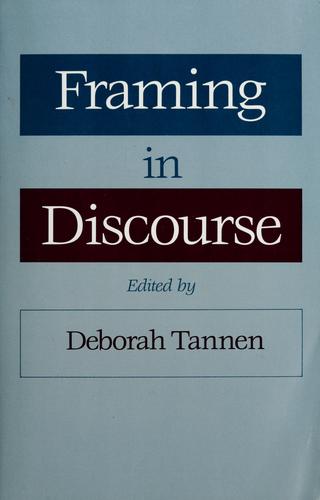 Framing in discourseDeborah Tannen
 Gender and conversational interactionDeborah Tannen
 Gender and discourseDeborah Tannen
 I Only Say This Because I Love YouDeborah Tannen
 Perspectives on silenceDeborah Tannen
 Talking from 9 to 5Deborah Tannen
 Talking voicesDeborah Tannen
 That's not what I meant!Deborah Tannen
 The argument cultureDeborah Tannen
 The Handbook of Discourse AnalysisDeborah Tannen
 You Just Don't UnderstandDeborah Tannen
 You were always mom's favoriteDeborah Tannen