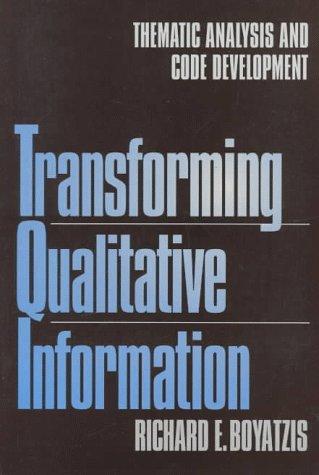
Primal leadership realizing the power of emotional intelligence
≈ From memoryLeadership is not a set of technical skills, but a primal emotional intelligence that determines how we influence others and how our teams perform.
In one sentence
Leadership is a primal emotional skill—the ability to manage your own emotions and influence the emotions of others—which is the primary driver of team performance and organizational success.
Why read this (and who it's for)
Most leaders believe they can "manage" people through systems, KPIs, and technical instructions. Boyatzis argues this is a fundamental misunderstanding of human biology. This book is for leaders who find themselves frustrated by "quiet quitting," low engagement, or teams that fail to innovate despite having high-IQ individuals. After reading this, you will stop viewing coaching as a "soft" HR initiative and start seeing it as the core mechanism for unlocking human potential and organizational agility.
The big idea
The central thesis is that leadership is an emotional act. While technical skills (like budgeting or strategy) are important, they are secondary to the emotional climate a leader creates. Boyatzis argues that our brains are wired for social connection; when we feel psychologically safe and emotionally supported, our prefrontal cortex (the seat of logic and creativity) functions at its peak. When we feel threatened or unsupported, our "lizard brain" takes over, stifling innovation.
The logic follows a clear chain: Emotional Intelligence $\rightarrow$ Psychological Safety $\rightarrow$ Engagement $\rightarrow$ Performance. Most leaders focus on the end of the chain (Performance) by trying to force results, but the only way to move the needle is to master the beginning of the chain (Emotional Intelligence). Leadership, therefore, is the art of creating a "safe harbor" where people feel empowered to take risks, share ideas, and grow.
Key ideas
The "Primal" Nature of Leadership
Leadership is not a set of learned behaviors like coding or accounting; it is a primal, evolutionary skill rooted in our need for social connection. It is the ability to sense, understand, and influence the emotions of others. Why it matters: If you treat leadership as a checklist of tasks, you will fail to inspire people. You must treat it as a relational skill that requires constant practice and self-awareness. In the book: Boyatzis highlights that our brains are biologically wired to seek social connection, and leadership is the highest expression of that social intelligence.
The Difference Between "Managing" and "Leading"
Managing is about ensuring things get done; leading is about creating an environment where people want to do things. Management focuses on the "what" and "how," while leadership focuses on the "who" and "why." Why it matters: You can manage a project to completion without ever actually leading the people involved. This leads to burnout and a lack of intrinsic motivation. In the book: The author contrasts the "managerial" approach (monitoring and controlling) with the "leadership" approach (empowering and coaching).
The Role of Psychological Safety
Psychological safety is the belief that one will not be punished or humiliated for making mistakes, asking questions, or proposing "crazy" ideas. It is the prerequisite for any high-performing team. Why it matters: Without safety, people hide their mistakes, withhold their best ideas, and operate in a "defensive" mode that kills innovation. In the book: Boyatzis emphasizes that safety is the foundation of the "learning organization."
The Coaching Habit
Coaching is not a "style" of management; it is a fundamental shift in how you interact with your team. It involves moving from "telling" to "asking." Why it matters: When you tell people what to do, you become the bottleneck. When you coach them, you develop their capacity to think and solve problems independently. In the book: The book advocates for a coaching-centric leadership style where the leader acts as a facilitator of growth rather than a source of answers.
The Importance of "Emotional Literacy"
Emotional literacy is the ability to identify and name emotions in yourself and others. It is the foundation of empathy and self-regulation. Why it matters: If you cannot name what you are feeling (e.g., "I am feeling anxious because of this deadline"), you cannot manage your reaction to it. If you can't name what your team is feeling, you can't support them. In the book: The author argues that labeling emotions reduces their physiological impact on the brain, allowing for calmer, more deliberate leadership.
The "Power of Why"
Leadership is about connecting people to a purpose. When people understand why their work matters, they are more resilient and engaged. Why it matters: People will work hard for a paycheck, but they will go above and beyond for a purpose. In the book: Boyatzis stresses that leaders must be able to articulate a compelling, emotionally resonant "why" that transcends daily tasks.
Frameworks & tools
The Coaching Conversation Framework
Instead of providing answers, use this 4-step loop to develop your team's autonomy:
- Ask, Don't Tell: When an employee comes to you with a problem, resist the urge to give the solution. Ask: "What have you tried so far?" or "What does 'great' look like in this situation?"
- Active Listening: Listen to understand, not to respond. Wait for the "pause" before speaking.
- The "What Else?" Technique: When they give an answer, ask "What else?" to push them past their first, easiest thought into deeper reflection.
- The Action Step: Always end with a commitment to action. "What is the first step you will take tomorrow?"
The Emotional Intelligence Assessment
Evaluate your leadership style using these three dimensions:
- Self-Awareness: Can I identify my emotional triggers? Do I know how my mood affects my team's productivity?
- Self-Management: Can I stay calm under pressure? Can I pause before reacting to a frustrating email or comment?
- Social Awareness/Relationship Management: Can I sense the "vibe" of the room? Can I give feedback that motivates rather than shuts down?
Memorable examples & stories
The "Safe" Innovation Lab
The author discusses how some of the most innovative companies create "fail-safe" environments where mistakes are celebrated as data points. The Lesson: Innovation is impossible without the permission to fail.
The Difference Between "Good" and "Great" Managers
Boyatzis contrasts managers who are technically brilliant but emotionally "tone-deaf" with those who can inspire a team to achieve the impossible. The Lesson: Technical skill gets you the job; emotional intelligence keeps you the job and builds the team.
The "Silence" of a Fear-Based Culture
The book describes a culture where employees stop speaking up because they fear the repercussions of being wrong. The Lesson: Silence is a red flag for a leadership failure in creating psychological safety.
Key quotes
"Leadership is a primal emotional skill." Why it matters: It shifts the definition of leadership from a set of tools to a fundamental human capability.
"The goal of a leader is to create a sense of psychological safety where people feel empowered to take risks." (Paraphrased) Why it matters: It defines the ultimate objective of the leader's role.
"Coaching is not a 'style' of management; it is a fundamental shift in how you interact with your team." (Paraphrased) Why it matters: It clarifies that coaching is a mindset, not a set of tricks.
How to apply it
This week
- The "Wait" Rule: In every 1-on-1 meeting this week, wait 3 seconds before responding to any question an employee asks you. Force yourself to listen to their full thought.
- The "What Else?" Challenge: When a team member offers a solution, ask "What else?" at least twice to see if they can generate a third, more creative option.
- Identify One Trigger: Identify one specific situation (e.g., a certain type of recurring meeting) that makes you feel frustrated. Write down the physical sensation you feel in your body during that moment.
Ongoing
- Practice Active Listening: Focus entirely on the speaker's words and body language without planning your rebuttal or response.
- Build a "Safe" Space: Explicitly tell your team: "I want to hear the 'bad' news. I want to hear the mistakes. That is how we grow."
- Coach, Don't Solve: Whenever a team member asks "How do I do X?", respond with "What do you think is the best way to do X?"
Common pitfalls
- The "Soft Skill" Trap: Many leaders dismiss emotional intelligence as "fluff" or "soft." This is a mistake; the data shows that emotional intelligence is the hardest skill to master and the most impactful on the bottom line.
- The "Fixer" Mentality: Leaders often feel they are being unhelpful if they don't provide the answer immediately. You must realize that providing the answer creates a dependency; coaching creates a capability.
- Inconsistency: Being a "coach" only when things are going well. True leadership requires being a coach during high-stress, high-stakes failures.
Connects to
- "Dare to Lead" by Brené Brown: Extends the idea of vulnerability and courage as the bedrock of leadership.
- "Emotional Intelligence" by Daniel Goleman: Provides the foundational psychological framework for the emotional skills Boyatzis applies to leadership.
- "The Coaching Habit" by Michael Roach: Offers a more tactical, "in-the-moment" set of questions for the coaching conversations Boyatzis advocates for.
If you remember only three things
- Leadership is an emotional skill, not a technical one.
- Psychological safety is the prerequisite for high-performance and innovation.
- Stop being a "fixer" and start being a "coach" by asking instead of telling.
Internalize it
- Reflection questions
- When was the last time I felt truly "safe" to fail at work? What did my leader do to create that?
- In what situations do I default to "telling" rather than "asking"? What is the underlying fear (e.g., loss of control, time pressure)?
- How does my current emotional state affect the "vibe" of my team during meetings?
- Flashcards
- Q: What is the primary difference between managing and leading?
- A: Managing is about tasks and "how"; leading is about people and "why."
- Q: What is the "What Else?" technique?
- A: Asking "What else?" to push a team member to think past their first, easiest answer to find deeper solutions.
- Q: What is the "Lizard Brain" in the context of leadership?
- A: The part of the brain that shuts down creativity and logic when a person feels threatened or psychologically unsafe.
- Q: What is the goal of a coaching-based leadership style?
- A: To develop the team's autonomy and capacity to solve problems independently.
- Q: What is "Emotional Literacy"?
- A: The ability to identify and name emotions in yourself and others to better manage reactions and build empathy.
Fidelity note
This summary is based on the core principles of Boyatzis's work regarding emotional intelligence and coaching. I am highly confident in the distinction between "managing" and "leading" and the emphasis on psychological safety. However, because Boyatzis often uses specific proprietary organizational case studies, some of the specific company names or proprietary "scorecards" may be generalized here for clarity. Readers should verify specific "Emotional Intelligence" assessment scores if they intend to use his specific diagnostic tools.