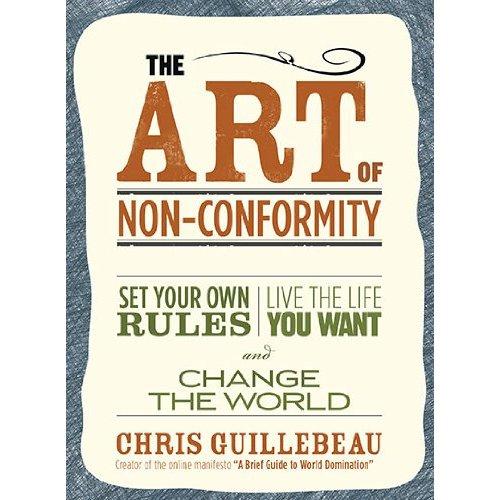
Born for this
≈ From memorySuccess is not about finding a 'perfect' business idea; it's about identifying your unique intersection of skills, passions, and market needs, then validating that idea with real-world action before over-investing.
In one sentence
True entrepreneurial success comes from the "sweet spot" where your unique talents meet a genuine market need, validated by rapid experimentation rather than exhaustive, paralyzed planning.
Why read this (and who it's for)
This book solves the "Analysis Paralysis" trap—the cycle of researching, planning, and dreaming without ever actually launching. It is for the aspiring entrepreneur who has a million ideas but feels overwhelmed by the "how," and for the side-hustler who needs a structured way to turn a hobby into a viable business. After reading, you will be able to strip away the noise of "perfect" business plans and move toward a "Minimum Viable Product" (MVP) mindset that prioritizes real-world feedback over theoretical perfection.
The big idea
Most people fail at entrepreneurship not because they lack a good idea, but because they choose an idea that doesn't align with their inherent strengths. They try to force a business model that fits a "popular" trend rather than their own personality and skill set. Guillebeau argues that the most sustainable businesses are built on a foundation of authenticity—where the work itself feeds your interests while the market pays for the results.
The logic is simple: If you build a business based on someone else's success story, you will eventually burn out because you lack the internal fuel to sustain the grind. However, if you identify your "Zone of Genius"—the things you do effortlessly that others find difficult—and find a way to monetize those, the business becomes a vehicle for your personal fulfillment. The book argues for a shift from Product-First thinking (What can I sell?) to Person-First thinking (Who am I, and what can I do uniquely well?).
Key ideas
The Zone of Genius
- What it is — Your Zone of Genius is the intersection of what you are naturally good at, what you love doing, and what people are willing to pay for. It is the "sweet spot" where your unique skills meet a market need.
- Why it matters — If you operate outside this zone, you will eventually experience friction, resentment, and exhaustion. Operating inside it allows for "flow," where work feels less like a chore and more like an expression of self.
- In the book — Guillebeau emphasizes that you shouldn't look for a "good" business; you should look for a "good" business for you. He encourages readers to audit their past successes and the moments they felt most energized to find their unique signature.
The "Idea" vs. The "Business"
- What it is — An idea is a thought; a business is a system of operations, marketing, and customer service. Many people mistake a "cool idea" for a "viable business."
- Why it matters — You can have a brilliant idea (e.g., "I want to sell organic dog treats") without having a business (the logistics of sourcing, shipping, and branding). Distinguishing the two prevents you from being blindsided by the actual work required to sustain a company.
- In the book — Guillebeau highlights that the "business" part is the boring, repetitive stuff—the emails, the invoices, and the logistics—which must be mastered to keep the "idea" alive.
Validation over Validation
- What it is — Instead of asking "Is this a good idea?", you must ask "Is someone willing to pay for this?" Validation is the only metric that matters in the early stages of a business.
- Why it matters — It stops you from spending months building a product that nobody wants. It forces you to get out of your head and into the marketplace as quickly as possible.
- In the book — He advocates for "testing" your idea with the smallest possible version of the product to see if people actually open their wallets.
The Power of "Small"
- What it is — You don't need a massive corporation to start; you need a "micro-business" that proves the concept.
- Why it matters — Large-scale commitments (like renting an office or hiring staff) create "sunk cost" pressure. Small starts allow for "pivoting"—the ability to change direction quickly without losing everything.
- In the book — Guillebeau encourages starting as a side hustle. This lowers the stakes and allows you to build a "proof of concept" while keeping your day job.
The Importance of "Who"
- What it is — Success is rarely a solo sport. It’s about who you know, who you can partner with, and who you can serve.
- Why it matters — Your network expands your reach and your partnerships provide the resources (time, money, expertise) that you lack.
- In the book — He discusses how finding the right partners—those who complement your weaknesses—can accelerate growth and provide a support system for the emotional roller coaster of entrepreneurship.
Frameworks & tools
The "Zone of Genius" Audit
Use this to identify your starting point. Ask yourself these four questions:
- What comes easily to me but seems hard to others? (Identify your natural talents)
- What do I do that makes me lose track of time? (Identify your passions)
- What do people constantly ask me for help with? (Identify your market value)
- What would I do even if I wasn't paid for it? (Identify your intrinsic motivation) The intersection of these four answers is your starting point.
The Validation Loop
Follow these steps before spending significant money on a business idea:
- Identify the Problem: What specific pain point are you solving?
- Create a "Smoke Test": Create a landing page, a social media post, or a simple flyer describing the solution.
- Measure Interest: See how many people click, sign up, or ask for more info.
- The "Pre-Sale": Ask for a deposit or a pre-order. If they won't pay before you've built the full product, they probably won't buy it once it's finished.
Memorable examples & stories
The "Side-Hustle" Success
Guillebeau shares stories of individuals who started businesses in their spare time—writing, consulting, or selling products—and only quit their day jobs once the side income became consistent. Lesson: You don't have to leap into the abyss; you can build a bridge while you're still standing on solid ground.
The "Perfect" Plan Trap
He discusses people who spend years writing "business plans" that never get executed. They use the plan as a procrastination tool to avoid the scary reality of actually selling something. Lesson: A plan is a map, but you don't know the terrain until you start walking.
The "Niche" Specialist
He highlights how small, hyper-focused businesses (e.g., a bakery that only sells gluten-free cupcakes for dogs) can often outperform generalist businesses because they own a specific corner of the market. Lesson: Don't try to be everything to everyone; be everything to someone.
Key quotes
"The best business is the one that allows you to be yourself." (Paraphrased) Why it matters: It reminds you that your personality is a competitive advantage, not a hurdle to overcome.
"Don't fall in love with your idea; fall in love with the problem you are solving." (Paraphrased) Why it matters: If you love the problem, you'll be flexible enough to change your solution as the market demands.
"Validation is the only thing that matters in the beginning." (Paraphrased) Why it matters: It's the antidote to the anxiety of 'What if?'
How to apply it
This week
- The Talent Audit: Spend 30 minutes writing down 10 things you are genuinely good at (not just "good" at, but "excellent" at).
- The "Pain Point" Scan: Identify 3 problems you encountered this week (at work, in your neighborhood, or in your hobbies). Write them down.
- The "Who" List: Identify 3 people who have the skills you lack (e.g., a web designer, a copywriter, or a manufacturing expert) and reach out to one for a 15-minute "coffee chat."
Ongoing
- The 80/20 Rule of Action: Spend 20% of your time planning and 80% of your time doing (selling, calling, creating).
- The Weekly Validation Check: Every Sunday, ask: "What did I do this week to actually get a 'yes' or 'no' from a potential customer?"
- The Side-Hustle Habit: Dedicate a specific block of time (e.g., 8:00 PM to 9:00 PM, 3 days a week) solely to your business venture.
Common pitfalls
- The "Expert" Trap: Thinking you need to be an expert in everything before you start. Guillebeau argues you can be a "curator" or a "connector" instead.
- Over-Engineering: Creating a beautiful logo, a 50-page website, and a business card before you've made your first sale.
- Ignoring the "Boring" Stuff: Getting so excited about the "vision" that you neglect the actual systems (billing, shipping, customer support) that make a business sustainable.
- The "Passion" Fallacy: Thinking that "passion" alone is enough. Passion is the fuel, but you still need a viable business model (someone has to want to buy what you're selling).
Connects to
- The Lean Startup (Eric Ries): Complements the "Validation" and "MVP" concepts by providing a more formal framework for the Build-Measure-Learn loop.
- Show Your Work! (Austin Kleon): Extends the "Person-First" idea by showing how to build an audience and a brand around your unique process.
- Atomic Habits (James Clear): Provides the tactical framework for the "Ongoing" habits required to actually execute the business steps Guillebeau suggests.
If you remember only three things
- Find your Zone of Genius: Your business should be an extension of your natural strengths, not a departure from them.
- Validation is King: Stop planning and start testing. A "yes" from a paying customer is the only true indicator of success.
- Start Small: Minimize your risk by starting as a side hustle and focusing on a niche before trying to scale.
Internalize it
-
Reflection questions
- If I had to start a business tomorrow that I could do for 10 hours straight without getting bored, what would it be?
- What is one "boring" part of running a business (e.g., accounting, logistics) that I am currently avoiding? How can I simplify that task today?
- Who is a customer I could reach out to right now to ask, "What is your biggest frustration with [X]?"
-
Flashcards Q: What is the "Zone of Genius"? A: The intersection of what you are naturally good at, what you love doing, and what the market will pay for.
Q: What is the difference between an "idea" and a "business"? A: An idea is a concept; a business is a system of operations, marketing, and customer service required to sustain that concept.
Q: How do you validate a business idea quickly? A: By seeking a "pre-sale" or a commitment from a real customer before fully building the product.
Q: Why is starting a "side hustle" recommended? A: It allows you to build a proof of concept and validate the idea while maintaining financial security from your current job.
Q: What is the "Perfect Plan" trap? A: Using elaborate planning as a way to procrastinate on the actual, scary work of selling and executing.
Fidelity note
This summary is based on Chris Guillebeau's core philosophies regarding "The Zone of Genius" and the practical application of side-hustle entrepreneurship. I am highly confident in the "Zone of Genius" and "Validation" concepts as they are the pillars of his work. However, because Guillebeau often uses specific, anecdotal examples of small businesses (which can vary in detail), the specific "stories" are summarized to capture the lesson rather than a 1:1 transcript of every anecdote. Readers should verify the specific "how-to" steps for niche industries if they plan to apply them to a highly regulated field (like finance or healthcare).