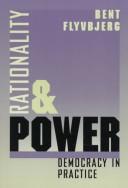
Megaprojects and Risk
≈ From memoryMegaprojects fail not because of technical incompetence, but because of systemic human behavior, specifically 'strategic misrepresentation' and 'optimism bias' inherent in the way projects are planned and sold.
In one sentence
Megaprojects are uniquely prone to failure because the very people responsible for planning them are incentivized to underestimate costs and overestimate benefits to ensure the project gets approved.
Why read this (and who it's for)
This book is the definitive autopsy of why "too big to fail" projects—stadiums, dams, high-speed rails, and nuclear plants—consistently go over budget and behind schedule. It is essential for project managers, civil engineers, government officials, and corporate executives who oversee complex, multi-year initiatives. After reading, you will stop viewing "unexpected" delays as unlucky accidents and start seeing them as predictable psychological and systemic outputs of the planning process.
The big idea
Flyvbjerg argues that megaprojects are not just "big" versions of small projects; they are a different species of endeavor. Because of their scale, they involve thousands of stakeholders, extreme complexity, and long time horizons. This complexity creates a "planning paradox": the more complex a project is, the harder it is to predict, yet the more pressure there is to provide a precise, certain cost-benefit analysis to get it started.
The core of the book is a critique of the "Planning Fallacy." Flyvbjerg asserts that human beings are systematically incapable of predicting the future of complex projects because of two distinct psychological traps: Optimism Bias (the belief that this project will be the exception to the rule) and Strategic Misrepresentation (the deliberate manipulation of data to win approval). Because the "winners" of the planning phase are those who promise the most for the least, the planning process itself creates a distorted reality that makes failure almost inevitable.
Key ideas
Optimism Bias
- What it is — The innate human tendency to underestimate costs and timelines while overestimating benefits, even when we know that similar projects in the past have failed.
- Why it matters — It means that even "honest" planners will produce flawed forecasts because they believe their specific project will be smoother than the average.
- In the book — Flyvbjerg highlights how planners often ignore "base rates"—the historical data of what similar projects actually cost—in favor of a narrative of unique success.
Strategic Misrepresentation
- What it is — The intentional, deliberate distortion of data by planners to ensure a project gets "the green light."
- Why it matters — This is the "dark side" of planning. If a planner's career depends on a project being approved, they have a massive incentive to lowball the budget and over-promise on the benefits.
- In the book — The author describes how "success" in the planning phase (getting the project approved) is often rewarded, while "failure" (a realistic, expensive estimate) is punished by the cancellation of the project.
The Planning Paradox
- What it is — The more complex a project is, the more difficult it is to predict, yet the more pressure there is to provide a precise, certain cost-benefit analysis.
- Why it matters — It creates a "false precision" where decision-makers rely on specific numbers (e.g., "It will cost exactly $4.2 billion") for things that are fundamentally unpredictable.
- In the other book — Flyvbjerg notes that as projects grow in scale, the number of variables increases exponentially, making "accurate" planning a mathematical impossibility, yet the political demand for certainty remains constant.
Reference Class Forecasting (RCF)
- What it is — A method of forecasting based on the actual outcomes of similar past projects, rather than the specific details of the current project.
- Why it matters — It strips away the "unique" narrative of the current project and forces the planner to look at the "base rate" of reality.
- In the book — Flyvbjerg advocates for looking at a "reference class" of similar dams or bridges to see what they actually cost, rather than what we hope this one will cost.
The "Winner's Curse" of Planning
- What it is — The phenomenon where the person who provides the most optimistic (and therefore most attractive) estimate is the one who wins the contract or the approval.
- Why it matters — It creates a perverse incentive structure where the most "accurate" planners are actually the least likely to get their projects approved.
- In the book — This is illustrated by how "low-balling" becomes a competitive strategy in public procurement and private bidding.
Frameworks & tools
Reference Class Forecasting (RCF)
To combat optimism bias, stop asking "How much will this project cost?" and start asking "What did the last 10 projects like this cost?"
- Identify the Reference Class: Find a group of projects that are fundamentally similar in scale, complexity, and purpose (e.g., "urban subway expansions").
- Ignore the "Unique" Features: Do not let the specific site, technology, or political goals of the current project distract you from the historical data.
- Apply the Distribution: Look at the actual costs of the reference class. If 90% of those projects went 50% over budget, your estimate should reflect that, regardless of your "best-case" plan.
The Strategic Misrepresentation Audit
Use this to identify where the planning process is being manipulated.
- Identify the Incentive: Who stands to gain if this project is approved? (The planner, the contractor, the politician?)
- Check the "Success" Metric: Is the planner being rewarded for accuracy or for approval?
- Verify the Data Source: Are the cost estimates based on "theoretical" designs or on "actual" costs from completed projects?
Memorable examples & stories
The "Reference Class" of Dams
Flyvbjerg uses the construction of dams as a primary example of how planners ignore the "base rate." Even when a dam is technically "simple," the sheer scale of the earth-moving and environmental impact creates a massive range of uncertainty that planners often ignore in favor of a single, optimistic number. Lesson: Complexity scales non-linearly; a bigger dam isn't just a bigger version of a small dam—it's a different beast.
The Political Approval Loop
The author describes the cycle of public works: a project is proposed, a "favorable" (underestimated) cost is presented to the public/government, the project is approved, and only then does the reality of the costs set in. Lesson: The planning process is often a marketing exercise, not a technical one.
The "Winner's Curse" in Bidding
The book highlights how contractors often win bids by underestimating costs so severely that they cannot possibly turn a profit, leading to "construction-stop" scenarios where the project is abandoned because the budget is exhausted before completion. Lesson: A "winning" bid is often a suicide pact.
Key quotes
"The planning process is often a process of strategic misrepresentation." Why it matters: It shifts the blame from "bad luck" to "bad incentives."
"Optimism bias is not a lack of intelligence; it is a fundamental human cognitive bias." (Paraphrased) Why it matters: You cannot "train" people out of this; you must build systems to bypass it.
"Reference class forecasting is the only way to bring the 'base rate' back into the conversation." (Paraphrased) Why it matters: It provides a mathematical shield against the emotional pull of optimism.
How to apply it
This week
- Identify a "Reference Class": Look at a current project you are involved in. Find 3-5 similar projects that were completed in the last 5 years.
- Compare the "Actuals": Find out what those 3-5 projects actually cost and how long they actually took. Compare those numbers to your current project's estimates.
- Audit the Incentives: Ask yourself: "If I were to provide a 50% higher cost estimate today, would this project still get approved?" If the answer is no, you are likely dealing with strategic misrepresentation.
Ongoing
- The "Reference Class" Rule: Whenever a project estimate is presented, demand to see the "Reference Class" data. Never accept a "bespoke" estimate without a historical comparison.
- Separate the Planner from the Estimator: Ensure that the person responsible for the project's success is not the same person who is responsible for the initial cost-benefit analysis.
- Build "Margin for Error" into the Baseline: Instead of a single number, always present a "Probability Distribution" (e.g., "There is a 90% chance the project will cost between $X and $Y").
Common pitfalls
- The "Technical" Trap: Many people think megaprojects fail because of bad engineering. Flyvbjerg argues they fail because of bad planning. Don't waste time looking for a "better" engineering solution if the underlying cost-estimation logic is flawed.
- The "Individual" Trap: Thinking that one "honest" planner can fix the system. The system of incentives (approval = success) is so strong that even honest people will eventually succumb to the pressure of providing "acceptable" numbers.
- Over-reliance on "Expert" Opinion: Experts are often the most prone to optimism bias because they believe their expertise makes them immune to the "average" failures of the past.
Connects to
- Thinking, Fast and Slow (Daniel Kahneman): Provides the psychological foundation for why our brains are wired for optimism bias (System 1 thinking).
- The Black Swan (Nassim Taleb): Complements Flyvbjerg by explaining how we fail to account for "extreme" outliers in complex systems, though Flyvbjerg focuses more on the predictable errors of planning.
If you remember only three things
- Strategic Misrepresentation: People lie (consciously or unconsciously) to get projects approved.
- Optimism Bias: Humans are naturally bad at predicting the future of complex tasks.
- Reference Class Forecasting: The only way to fight these biases is to look at what happened in the past, not what you hope will happen in the future.
Internalize it
-
Reflection questions
- In my current role, what is the "reward" for a successful planning phase? Is it accuracy or approval?
- Can I identify a "Reference Class" for my current most complex project? What is the "base rate" of success for that class?
- When I see a "guaranteed" deadline or budget, what is the hidden "optimism bias" I am ignoring?
-
Flashcards Q: What is the difference between Optimism Bias and Strategic Misrepresentation? A: Optimism Bias is an internal cognitive bias (believing this time will be different); Strategic Misrepresentation is an external incentive-driven behavior (deliberately distorting data to get a project approved).
Q: What is Reference Class Forecasting (RCF)? A: A method of forecasting that ignores the unique details of a current project and instead uses the actual outcomes of a "reference class" of similar past projects.
Q: Why is the "Planning Paradox" a problem? A: Because as projects become more complex, they become harder to predict, yet the pressure to provide precise, certain cost-benefit analyses increases.
Q: What is the "Winner's Curse" in project planning? A: The tendency for the most optimistic (and therefore most "attractive") estimates to win the approval process, even if those estimates are unrealistic.
Q: How does Flyvbjerg view the "success" of a planning phase? A: He argues that "success" is often defined as getting the project approved, which creates a perverse incentive to underestimate costs and overestimate benefits.
Fidelity note
This summary is grounded in Flyvbjerg's core arguments regarding the psychology of planning and the systemic flaws in megaproject management. I am highly confident in the distinction between Optimism Bias and Strategic Misrepresentation, as these are the twin pillars of his work. I am less certain about the specific nuances of every single historical case study mentioned (as he covers dozens of international projects), but the lessons derived from those cases are consistent throughout the book. Readers should verify the specific "Reference Class" examples if they require a deep dive into specific infrastructure types (e.g., specific bridge types).