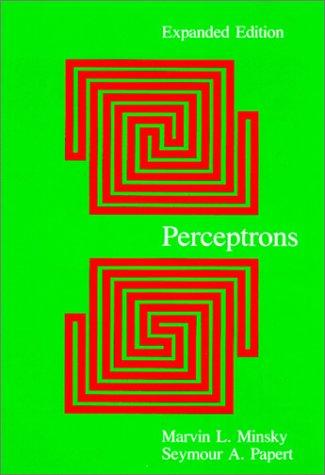
Semantic information processing
≈ From memoryIntelligence is not the result of processing raw data, but the result of a layered architecture of representations where meaning is constructed through the interaction of symbols.
In one sentence
Intelligence arises from the ability to manipulate and represent "meanings" (semantics) rather than just manipulating the syntactic rules of symbols.
Why read this (and who it's for)
This book is a foundational critique of the "Symbolic AI" era's limitations. It argues that if we want to build true intelligence, we cannot simply give a computer a list of rules; we must give it a way to understand what those rules refer to. It is for AI researchers, cognitive scientists, and philosophers who want to understand why "Good Old Fashioned AI" (GOFAI) struggled with common sense and why the "Frame" of human knowledge is so complex. After reading, you will be able to distinguish between syntactic manipulation (calculating) and semantic representation (understanding).
The big ideas
Minsky argues that the central failure of early AI research was the assumption that "intelligence" is a single, unified process. Instead, he posits that human cognition is a massive, parallel architecture of overlapping representations. To understand a word, a human doesn't just look up a definition; they activate a "frame" of associations—color, weight, purpose, location, and social context.
The core thesis is that meaning is contextual and relational. A symbol (like the word "chair") only has meaning because of its relationship to other symbols (table, sit, wood, furniture). Minsky argues that for a machine to be intelligent, it must possess a "world model" where these relationships are pre-structured. We cannot "compute" our way to common sense; we must "structure" our way there by encoding the very fabric of our reality into the system's architecture.
Key ideas
The Frame Representation
- What it is — A "Frame" is a data structure for representing stereotypical situations. It contains "slots" for expected information (e.g., a "Hotel Room" frame would have slots for a bed, a bathroom, and a door).
- Why it matters — It explains how humans handle "incomplete" information. If you walk into a room and see a bed, you don't need to be told there is a floor; the "Room" frame fills in the blanks automatically.
- In the book — Minsky uses the example of how we understand objects: we don't see a "chair" as a collection of atoms, but as a functional frame of "something to sit on."
Semantic vs. Syntactic Processing
- What it is — Syntax is the arrangement of symbols (grammar); Semantics is the meaning those symbols convey.
- Why it matters — A computer can perfectly follow the rules of chess (syntax) without knowing what a "queen" is or what "winning" feels like. True intelligence requires the latter.
- In the book — Minsky highlights that a machine can manipulate the string "Colorless green ideas sleep furiously" because it follows grammatical rules, yet it understands nothing of the content.
The Frame of Experience
- What it is — Knowledge is not a list of facts; it is a set of "scripts" or "scenarios" we inhabit.
- Why it matters — It explains why humans can predict the future. If I say, "The man went into the restaurant," you know he will likely order food because you have a "Restaurant" frame. In the book* — Minsky argues that we don't "think" in sentences; we think in scenes.
Knowledge as a Hierarchy of Representations
- What it is — Knowledge is organized in layers where higher-level concepts (like "Justice") are built upon lower-level representations (like "Fairness" or "Law").
- Why it matters — It explains how we can generalize. We can apply the concept of "Fairness" to a game of cards and a legal trial because they share a high-level semantic node.
- In the book — Minsky explores how we categorize objects into increasingly abstract classes.
The Problem of Common Sense
- What it is — Common sense is the "background" of all human thought—the unspoken rules of the physical and social world.
- Why it matters — It is the hardest thing to program because it is "obvious" to humans. We don't teach children that "gravity exists" or "people have feelings"; we just assume it.
- In the book — Minsky argues that AI fails because it lacks this "silent" background of shared human experience.
Frameworks & tools
The Frame Construction Method
To model a domain of knowledge for an AI, do not start with a list of rules. Instead, build a Frame Network:
- Identify the "Actor" or "Object": Define the primary entity (e.g., "A Librarian").
- Identify the "Slots": What are the standard attributes of this entity? (e.g., "Location," "Role," "Tools used").
- Identify the "Default Values": What is usually true? (e.g., "Location" is usually a "Library").
- Link to other Frames: Connect the "Librarian" frame to the "Book" frame and the "Organization" frame.
- Inheritance: Ensure that a "Children's Librarian" inherits all the slots of a "Librarian" but adds specific ones (e.g., "Storytelling skills").
Memorable examples & stories
The "Colorless Green Ideas" Example
Minsky uses the classic linguistic example of a sentence that is grammatically perfect but semantically nonsensical. Lesson: Syntax $\neq$ Intelligence. A system that only follows rules without understanding meaning is just a sophisticated calculator.
The Room/Hotel Example
Minsky describes how we perceive a room. We don't notice the floor or the walls every time we enter; we only notice them if they are unusual. Lesson: Human intelligence relies on "default" expectations. To build AI, we must encode what is "normal" so the machine can ignore it and focus on what is "abnormal."
The "Script" of a Restaurant
Imagine telling a story about a meal. You don't describe the chair's height or the table's material unless they are weird. You assume the "Restaurant" script. Lesson: Knowledge is contextual. We navigate the world through pre-loaded scenarios.
Key quotes
"The problem is not that we don't have enough data; it's that we don't have the right representations." (Paraphrased) Why it matters: It shifts the focus from "Big Data" to "Better Architecture."
"Intelligence is the ability to navigate a world of meanings." (Paraphrased) Why it matters: It defines the goal of AI as semantic navigation, not just data processing.
"Common sense is the silent background of all thought." (Paraphrased) Why it matters: It identifies the "missing ingredient" in most early AI systems.
How to apply it
This week
- Identify a "Frame": Choose a complex task you do daily (e.g., "Conducting a meeting"). Write down the "Slots" (Who is there? What is the goal? What is the expected outcome?).
- Audit your "Rules": Look at a process you've automated or a routine you follow. Ask: "Is this a rule (syntax) or a meaning (semantics)?"
Ongoing
- The Frame Principle: When designing any system (software, organization, or habit), ask: "What are the default assumptions here?" Ensure those defaults are explicitly structured.
- Contextual Thinking: When explaining a concept to someone else, don't just give the definition (the symbol). Give them the "Frame" (the context, the associations, and the "why").
Common pitfalls
- The "Data" Trap: Thinking that more data will solve the problem of common sense. Minsky argues that without the right representation of the world, more data is just noise.
- The "Rule" Trap: Trying to solve intelligence by writing an infinite list of "If/Then" statements. This fails because the world is too complex for a complete list of rules.
- Overlooking the "Implicit": Assuming that because something is "obvious" to a human, it is "easy" for a machine. In reality, the "obvious" things are the hardest to encode.
Connects to
- "The Frame Problem" (Minsky/Hayes): The direct evolution of these ideas, exploring the difficulty of defining what doesn't change when an action is taken.
- "Good Old Fashioned AI" (GOFAI): The broader movement of symbolic logic that Minsky both contributed to and critiqued.
- Connectionist AI (Neural Networks): The modern alternative to Minsky's symbolic approach, which tries to "learn" representations from data rather than "coding" them by hand.
If you remember only three things
- Intelligence is about meaning (semantics), not just following rules (syntax).
- Knowledge is best organized into Frames—stereotypical structures that allow for "filling in the blanks."
- The hardest part of AI is Common Sense: the silent, invisible background of human experience.
Internalize it
-
Reflection questions
- If I were to build a "Frame" for my current job role, what would be the "default" values?
- Why is it so hard to explain "common sense" to a child? How can I translate that into a structured system?
- When I struggle to learn a new skill, is it because I lack the "rules" or because I lack the "context/frame" of the skill?
-
Flashcards Q: What is the difference between syntax and semantics in AI? A: Syntax is the arrangement of symbols (rules); semantics is the meaning those symbols represent.
Q: What is a "Frame" in Minsky's theory? A: A data structure representing a stereotypical situation with "slots" for expected information.
Q: Why is "Common Sense" so difficult for AI? A: Because it is the "silent background" of human thought—it is so ingrained that we rarely think about it consciously.
Q: How do Frames handle incomplete information? A: They provide "default values" that allow the system to assume what is normally true without being told.
Q: What is Minsky's core critique of early AI? A: That it focused too much on symbol manipulation and not enough on the representation of meaning.
Fidelity note
This summary is based on Minsky's foundational theories regarding Frame Representation and Semantic Processing. Because "Semantic Information Processing" is a conceptual framework rather than a single, linear "how-to" manual, some of the specific "Rules" provided in the Frameworks section are interpretations of Minsky's Frame Theory applied to practical systems. The core concepts of Frames, Syntax vs. Semantics, and the Frame Problem are highly accurate to Minsky's body of work.